
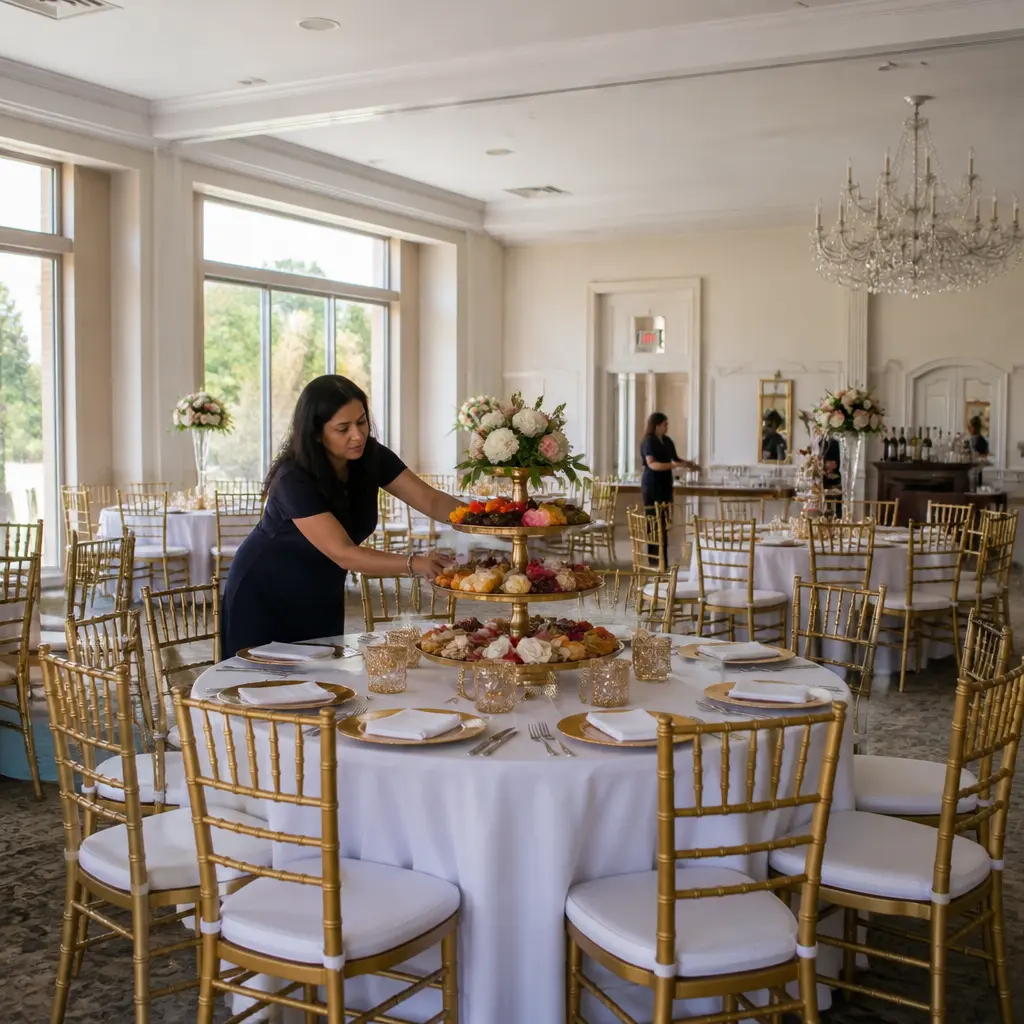
Presentation signature design is the deliberate use of distinctive visual, sensory, and interactive details to make a private function feel personal and memorable. The strongest signature presentation ideas combine a clear host identity with a dramatic reveal, thoughtful guest participation, and polished execution—from monogrammed menus and tableside finishing to edible centerpieces and coordinated lighting. This matters because Freeman’s event research reports that 91% of attendees say in-person events make them feel more connected to other people, while Nielsen has found that recommendations from people known to consumers remain among the most trusted forms of influence. The sections below explain how signature presentation design creates recognition, how its main formats work, and how hosts can turn a menu, table, or live moment into the part of the evening guests remember.
Creates: Signature Presentation Design
Signature presentation design is an intentional system of presentation choices that expresses the identity of a host, brand, family, or occasion. In event-design practice, it is not simply decoration; it is the coordinated presentation of objects, food, people, sound, lighting, and timing. The International Live Events Association describes event design as a process that brings creative concepts and logistical execution together to create an audience experience. Applied to private functions, the concept means that every visible detail supports one recognizable story.
The key characteristics are consistency, contrast, personalization, movement, and a clear moment of reveal. A private dinner might use a restrained palette, engraved place cards, and a server-finished dessert. A milestone celebration might use a bold entrance installation, a custom cocktail ritual, and a projection that traces the guest of honor’s story. These are hyponyms of signature presentation design: personalized tabletop presentation, tableside culinary presentation, interactive display presentation, and theatrical reveal presentation.
Personalized Tabletop Presentation
Personalized tabletop presentation gives each guest a small but deliberate sign that the event was designed with them in mind. Examples include handwritten menus, laser-cut names, custom menu descriptions, family photographs, symbolic objects, or color-coded details that quietly guide guests to their seats. The technique works because recognition does not require extravagance; a well-placed personal detail can make a formal setting feel intimate.
For a private function, personalization should be selective rather than cluttered. Use one primary signature element—such as a monogram, botanical motif, family crest, or company mark—and repeat it across two or three touchpoints. The menu, napkin fold, and favor might share the same motif, while the tableware remains neutral. This creates visual memory without making the room feel branded or overproduced.
Tableside Culinary Presentation
Tableside culinary presentation is the preparation, finishing, pouring, carving, or garnishing of food and drink in front of guests. It converts a meal from a static service into a live performance. Suitable examples include a server pouring a clear consommé over a composed dish, shaving truffles at the table, flaming a dessert, assembling a miniature dessert garden, or mixing a signature drink beside the guest.
The strongest version is brief, legible, and connected to the occasion. A tableside action should usually take less than a few minutes, offer an unobstructed view, and have a clear explanation. Event planners should also consider ventilation, fire safety, allergy communication, and service flow. The National Restaurant Association’s industry research consistently identifies guest experience and hospitality as important factors in restaurant choice, which supports the broader principle that the manner of presentation can be as influential as the item being served.
Signals: Signature Visual Presentation
Signature visual presentation uses composition, scale, color, and lighting to establish an immediate point of attention. Its purpose is to help guests understand the event’s character before the first speech or course begins. A private function can achieve this through a sculptural floral installation, a suspended dessert display, a mirrored bar, a dramatic escort-card wall, or a single oversized object connected to the event story.
Statement Entrances and Arrival Displays
A statement entrance is a designed arrival sequence that creates anticipation before guests enter the main room. It may include a scent associated with the host, a custom sound cue, a candlelit walkway, a projection of archival images, or a host-branded welcome drink. Arrival displays are especially effective at private functions because they establish a controlled first impression and give guests an easy conversation starter.
The entrance should communicate the event’s level of formality without revealing every surprise. For an elegant anniversary, a narrow gallery of framed memories may be more effective than a large floral arch. For a product dinner, a series of covered objects can create curiosity before the reveal. A useful planning chart can map the guest journey across four stages—arrival, discovery, participation, and farewell—and assign one signature visual cue to each stage.
Edible Centerpieces and Display Architecture
An edible centerpiece is a food or beverage display designed to function as both nourishment and visual composition. Examples include a tiered cheese landscape, a sculpted bread installation, a dessert tower, a fruit arrangement styled around the event palette, or individual tasting portions presented on a botanical display. Display architecture extends the idea to the physical structure: risers, trays, platforms, glass cloches, and varying heights that create rhythm across a table.
The design must preserve access and hygiene. Guests should be able to identify what is being served, reach it without crossing another place setting, and understand whether an item is decorative or edible. Varying height by approximately one-third between low, medium, and high elements can add depth, but sightlines should remain open so guests can see one another. The display should also be tested from seated and standing positions before service begins.
Engages: Interactive Signature Presentation
Interactive signature presentation invites guests to influence, assemble, reveal, or contribute to part of the experience. It can be as simple as a choice of finishing salts or as elaborate as a collaborative dessert station. Unlike passive decoration, interactive presentation gives guests a role, increasing the likelihood that they will discuss the moment and remember it afterward.
Choice-Based Food and Beverage Stations
A choice-based station presents a limited number of curated decisions rather than an overwhelming buffet. A cocktail bar might offer three house infusions, two garnishes, and a personalized glass tag. A late-night snack station could let guests select a sauce, topping, or presentation style. The host’s signature appears in the boundaries: the choices are edited, named, and connected to the event’s story.
Successful stations balance novelty with speed. Organizers should estimate the number of guests arriving during the busiest 10- to 15-minute period, then provide enough staff and duplicate tools to prevent queues. Clear allergen labels and nonalcoholic alternatives make the experience more inclusive. The Centers for Disease Control and Prevention emphasizes the importance of clear food-allergy communication and prevention practices, making labeling an essential part of presentation rather than an afterthought.
Live Reveals and Participatory Moments
A live reveal is a timed presentation in which guests discover an object, performance, message, or visual transformation at a planned moment. Possibilities include opening a concealed dessert room, unveiling a portrait, lowering a hanging installation, revealing a custom cake, or coordinating a musical cue with a lighting change. Participatory moments can include guest-written wishes, a collective toast, a collaborative art panel, or a recipe assembled from contributions gathered before the event.
The reveal should be meaningful rather than merely surprising. A private birthday function might reveal a video assembled from messages sent by absent friends; a company retreat might unveil a shared mission statement created during the day. Freeman’s research on the emotional value of in-person events supports this approach: the objective is not only visual impact but also a stronger sense of connection and shared presence.
Elevates: Signature Sensory Presentation
Signature sensory presentation coordinates sight, sound, scent, touch, and taste so that an event feels coherent rather than visually impressive but emotionally flat. Sensory design is particularly useful in private functions because a smaller guest list allows more precise control over timing, volume, lighting, and personal comfort.
Lighting, Sound, and Scent Cues
Lighting can shift an event from welcome brightness to dinner intimacy and then to celebration energy. Warm pools of light can emphasize place settings, while a focused spotlight can frame a cake or speech. Sound cues can mark transitions without requiring an announcement, and a subtle signature scent can reinforce a theme when used carefully.
Sensory elements require restraint. Strong fragrance may affect guests with sensitivities, loud music can prevent conversation, and rapidly changing lights may be uncomfortable. Ask about accessibility needs in advance, offer scent-free zones where possible, and ensure that every sensory cue supports rather than interrupts hospitality.
Tactile Details and Farewell Presentation
Tactile presentation includes materials guests can feel and carry: textured menus, ribbon-tied favors, embossed cards, ceramic vessels, linen napkins, or a small object associated with the occasion. Farewell presentation extends the signature beyond the final course through a takeaway dessert, handwritten note, seed packet, recipe card, or photograph printed during the event.
A farewell detail is particularly valuable because it provides a physical reminder after the function ends. It should be compact, useful, and easy to transport. For a corporate private dinner, a locally made object can connect the event to its destination; for a family celebration, a preserved recipe or archival photograph can turn presentation into a keepsake.
Directs: Signature Presentation Execution
Signature presentation succeeds when creative ambition is matched by operational discipline. Before approving an idea, test it against four questions: Can guests understand it immediately? Can staff deliver it consistently? Does it fit the host’s identity? Will it improve the social experience rather than distract from it?
A practical execution plan should include a scaled sketch, a guest-flow map, a service timeline, a responsibility chart, and a contingency for equipment or staffing failure. Photographing a tabletop prototype from guest eye level can reveal blocked sightlines and excessive height. A short rehearsal should also test the reveal, lighting cue, music transition, serving temperature, and cleanup time.
The most memorable private functions rarely use every idea at once. Select one hero presentation, two supporting details, and one meaningful farewell gesture. That hierarchy protects the budget, reduces visual noise, and gives guests a clear story to remember. Hosts can evaluate success through guest comments, social sharing, participation rates, service delays, and post-event feedback rather than relying only on décor cost.
Signature presentation design turns ordinary hospitality into a recognizable experience by connecting personalization, visual drama, interaction, and sensory control. Personalized tabletop presentation makes guests feel considered; tableside culinary presentation adds movement; statement entrances and edible centerpieces establish visual memory; interactive stations and live reveals build participation; and sensory details carry the story through the evening. For anyone planning a private function, the next step is to define the event’s single strongest idea, sketch how guests will encounter it, and test the execution before investing in the full production.
Sources: Freeman, The New Trifecta of Event Success, https://www.freeman.com/resources/the-new-trifecta-of-event-success/; Nielsen, Global Trust in Advertising, https://www.nielsen.com/insights/2015/global-trust-in-advertising-2015/; International Live Events Association, Event Design and Production Resources, https://ileahub.com/; National Restaurant Association, 2024 State of the Restaurant Industry Report, https://restaurant.org/research-and-media/research/research-reports/state-of-the-restaurant-industry/; Centers for Disease Control and Prevention, Food Allergies in Schools and Early Care and Education Programs, https://www.cdc.gov/healthyschools/foodallergies/index.htm.