
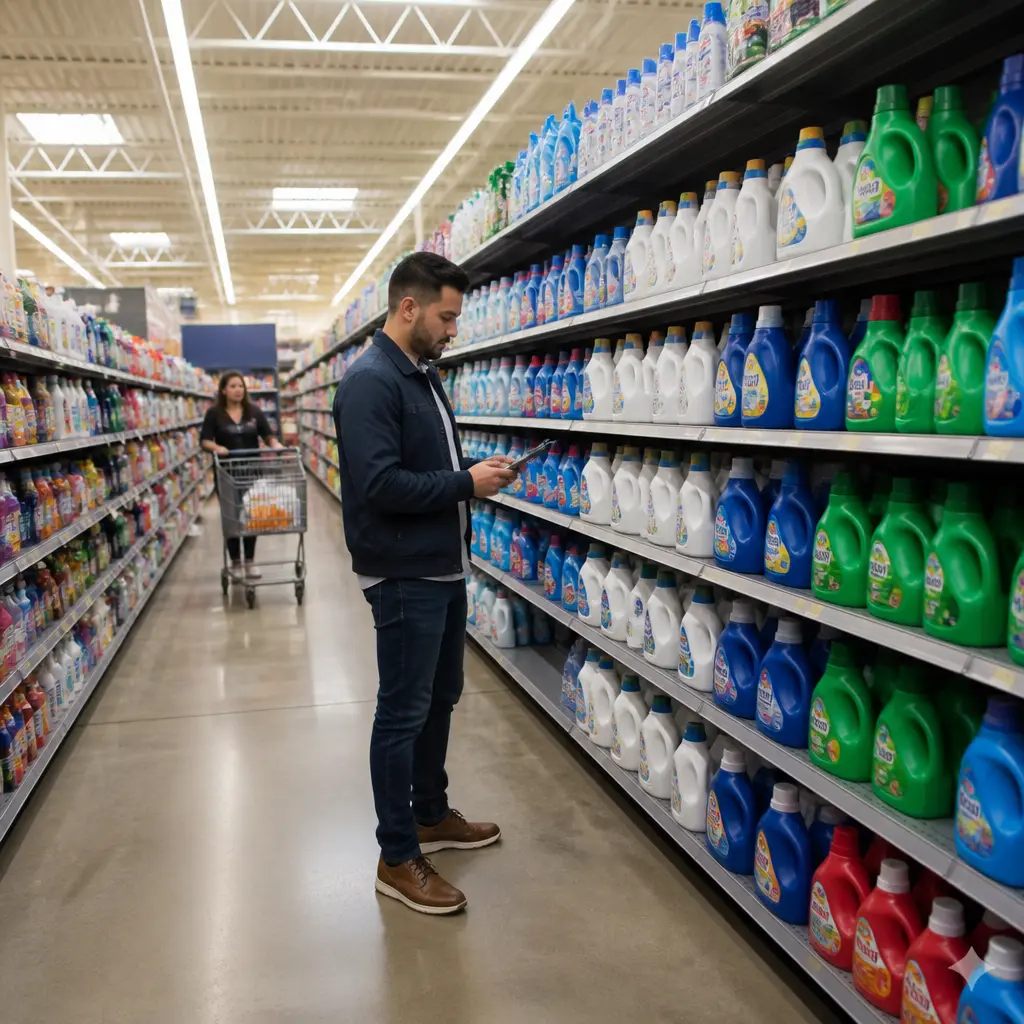
Pricing fairness is the perception that a price is reasonable, explainable, and consistent with the value and circumstances of a purchase. Businesses can make pricing feel fair while protecting profit by combining transparent total-cost communication, value-based tiers, carefully designed discounts, customer-segment testing, and guardrails against exploitative fees. The approach matters because inflation has made price sensitivity more visible: the U.S. Bureau of Labor Statistics reported that the Consumer Price Index for All Urban Consumers rose 2.9% on an annual-average basis in 2024, while the Baymard Institute’s benchmark research places average online cart abandonment near 70%. A fair-price strategy therefore has to do two things at once: preserve contribution margin and prevent customers from feeling surprised, manipulated, or punished.
Defines Pricing Fairness as a Profit-Preserving Attribute
Pricing fairness is a customer judgment about whether a seller’s price and pricing process are appropriate in relation to the product’s value, the seller’s costs, comparable alternatives, and the treatment of other buyers. In a widely cited academic review, Xia, Monroe, and Cox describe price fairness as a consumer’s assessment of whether the difference between a seller’s price and a relevant comparison price is reasonable, acceptable, or justifiable. This definition makes fairness a perception rather than a fixed mathematical property: two customers may see the same price differently depending on their expectations, information, and reference points.
Uses Transparency to Reduce Negative Price Perceptions
Transparent pricing shows the total amount payable, explains material conditions, and distinguishes optional upgrades from unavoidable charges. It does not require a company to reveal every internal cost. Instead, it requires the buyer to understand what is being purchased and why the final amount differs from an advertised starting price.
This is commercially important because unexpected fees create a sharper negative reaction than a higher price disclosed at the beginning. The Baymard Institute’s e-commerce research identifies extra costs such as shipping, taxes, and fees as one of the leading reasons shoppers abandon carts. A useful chart for managers would compare conversion rates for an all-in price against a lower headline price followed by late-stage charges; the key metric is not merely click-through rate but completed purchase rate and contribution margin per visitor.
Balances Reference Prices and Perceived Value
Customers judge fairness using reference prices: remembered prices, competitor prices, regular list prices, and the price of a similar product. A discount can feel attractive when the reference price is credible, but misleading when the “original” price was rarely charged. Bolton, Warlop, and Alba’s research on price fairness shows that consumers consider both market comparisons and the perceived legitimacy of the seller’s pricing process.
Businesses should therefore connect price differences to visible value differences. A premium plan might include faster delivery, expanded usage, better support, or lower risk. If two plans have nearly identical benefits, a large price gap can appear arbitrary even when the higher tier is profitable.
Builds Pricing Fairness Through Value-Based Architecture
Value-based pricing sets prices according to the economic and experiential value customers receive rather than relying only on cost-plus formulas or competitor matching. It is not permission to charge the maximum possible price. A defensible value-based system identifies customer outcomes, measures willingness to pay, and ensures that the price remains understandable relative to the benefit.
Uses Good-Better-Best Tiers
Tiered pricing creates a structured choice among a basic, standard, and premium offer. The basic option protects affordability, the middle option often becomes the commercial anchor, and the premium option captures willingness to pay from customers who value additional convenience or capability.
- Define each tier by outcomes and service levels rather than vague labels.
- Keep the entry tier genuinely usable so it does not function as a deceptive decoy.
- Make the middle tier visibly complete and easy to compare.
- Reserve premium features for benefits that a specific segment values enough to fund.
Software companies commonly use this structure by separating limits on seats, storage, automation, support, or analytics. A fair architecture lets smaller customers pay less because they consume less value or capacity, while larger customers pay more because the product contributes more to their operations.
Applies Usage-Based and Outcome-Based Hyponyms Carefully
Usage-based pricing charges according to measurable consumption, such as deliveries, API calls, miles, minutes, or units processed. Outcome-based pricing ties payment to an achieved result, such as qualified leads or energy savings. Both can align price with value, but they can also create anxiety when customers cannot predict their bill.
Fair usage-based pricing should include calculators, estimates, spending alerts, caps, rollover rules, and clear overage rates. An outcome-based contract should define the measurement method, exclusions, verification process, and dispute procedure before the customer commits. These safeguards turn variable pricing from a perceived penalty into a controllable cost.
Improves Pricing Fairness Through Segmentation and Personalization
Segmented pricing offers different prices or packages to customer groups with different needs, service costs, or willingness to pay. Common hyponyms include student discounts, nonprofit rates, geographic pricing, enterprise contracts, loyalty rewards, and advance-purchase fares. The practice can improve access and profitability, but it becomes controversial when customers believe they are being secretly charged different prices for identical circumstances.
Separates Eligibility-Based Discounts from Secret Individual Prices
Eligibility-based discounts are easier to defend because the qualification rule is visible: a student verifies enrollment, a nonprofit provides documentation, or a customer commits to an annual plan. Secret individualized prices based on inferred income, device type, location, or browsing behavior are harder to explain and may damage trust even when they increase short-term revenue.
A responsible policy publishes the reason for the discount, the evidence required, the duration, and whether the benefit can be combined with other offers. The company should also test for disparate effects across demographic groups and ensure that personalization does not rely on sensitive characteristics or misleading urgency.
Uses Loyalty Pricing Without Punishing Nonmembers
Loyalty pricing rewards repeat behavior through points, memberships, bundles, or reserved benefits. It feels fair when members receive additional value for providing a real commitment, such as a subscription, advance payment, or repeat purchase. It feels unfair when the nonmember price is inflated mainly to make the membership appear cheaper.
A practical test is to compare the ordinary price, the membership fee, the break-even number of purchases, and the cancellation process. If a typical customer cannot reasonably reach break-even, the program should be redesigned or marketed only to a narrower segment.
Protects Pricing Fairness with Discounts and Dynamic Pricing Guardrails
Dynamic pricing changes prices in response to demand, inventory, timing, capacity, or market conditions. Discounting lowers a price temporarily or conditionally. Both strategies can improve utilization and margins, but customers are sensitive to sudden price increases, artificial scarcity, and discounts that appear permanent.
Designs Discounts That Preserve Margin
A profitable discount starts with a margin floor. The company should calculate the minimum acceptable contribution after product cost, fulfillment, payment processing, returns, support, and acquisition costs. Discounts can then be targeted toward an incremental behavior rather than given universally.
- Use a first-purchase offer to acquire a customer only when expected future contribution justifies the subsidy.
- Offer bundles to increase units per transaction while making the per-unit saving visible.
- Use time limits for genuine inventory or capacity reasons, not fabricated countdowns.
- Set coupon exclusions and expiration dates in plain language.
- Measure incremental profit, not redemption volume alone.
Prices ending in nine can improve perceived value in some categories, but they are not a substitute for trust. Research summarized by marketing scholar Robert Schindler indicates that just-below pricing can influence price perception, particularly when consumers process prices quickly. The effect should be tested against brand positioning: a $9.99 price may support a value brand but conflict with a premium service that emphasizes simplicity and quality.
Sets Dynamic Pricing Rules Customers Can Understand
Dynamic pricing is most defensible when the driver is relevant and observable. Hotel prices may change with dates and occupancy; transportation prices may change with capacity and demand; perishable goods may be discounted as sell-by dates approach. Customers are more likely to accept these changes when the business explains the mechanism and does not exploit emergencies or locked-in demand.
Useful guardrails include maximum increase limits, advance notice for subscriptions, price locks during checkout, refund or credit policies after material price drops, and monitoring for unusually large disparities. In the United States, the Federal Trade Commission has treated hidden mandatory charges as a consumer-protection concern, while the European Union’s consumer rules emphasize clear information about the total price and unavoidable charges. Legal compliance is the minimum standard; perceived legitimacy is the stronger commercial objective.
Measures Pricing Fairness Alongside Healthy Profit
A fair pricing strategy should be evaluated as a portfolio of customer and financial outcomes. Revenue alone can rise after a price increase while retention, referrals, and trust deteriorate. Conversely, conversion can improve after a discount while contribution margin becomes negative.
Tracks a Balanced Pricing Scorecard
A practical scorecard combines financial, behavioral, and perception metrics:
- Contribution margin per order, customer, or active account.
- Conversion rate and checkout abandonment after full-price disclosure.
- Average order value, discount rate, refund rate, and renewal rate.
- Price-related complaints, support contacts, review sentiment, and chargebacks.
- Customer-perceived value and fairness measured through surveys or structured interviews.
- Retention, referral, and lifetime value by segment and offer type.
Companies should examine these measures together. For example, a transparent price may reduce initial clicks but increase completed purchases and lower support costs. A discount may increase order volume but attract customers who never repurchase. The right decision is the one that improves profitable lifetime value without creating avoidable resentment.
Runs Fairness Tests Before Broad Rollout
Price testing should compare not only different price points but also different explanations, package structures, and displays of total cost. Randomized experiments can test conversion and margin, while qualitative research reveals why customers consider an offer acceptable or unfair.
A responsible review asks whether customers understood the price, whether they could reasonably avoid an unwanted charge, whether similarly situated customers were treated consistently, and whether the offer would remain defensible if publicly described. This “front-page test” is not a statistical measure, but it is a useful governance filter for pricing decisions that may create reputational or regulatory risk.
Conclusion: Makes Pricing Fairness a Durable Profit Attribute
Pricing fairness is not the same as charging the lowest price. It is the disciplined combination of understandable prices, credible value differences, consistent eligibility rules, transparent discounts, and safeguards against surprise charges. Value-based tiers and usage-based models can align payment with outcomes; segmentation can improve access and capture willingness to pay; dynamic pricing can balance capacity and demand when its rules are relevant and explainable.
The strongest businesses treat fairness as a measurable pricing attribute rather than a marketing slogan. They publish total costs, protect customers from unpredictable overages, calculate margin floors, monitor complaints and retention, and test whether an offer remains acceptable across customer groups. Managers should begin by auditing every mandatory fee and discount, then build a scorecard linking perceived fairness to contribution margin, conversion, renewal, and lifetime value. Further reading from the Federal Trade Commission, the U.S. Bureau of Labor Statistics, the Baymard Institute, and the academic research on price fairness can help turn these principles into an operating standard.
Sources: Xia, Lan, Kent B. Monroe, and Jennifer L. Cox, “The Price Is Unfair! A Conceptual Framework of Price Fairness Perceptions,” Journal of Marketing, 2004, https://journals.sagepub.com/doi/10.1509/jmkg.68.4.1.42733; Bolton, Lisa E., Luk Warlop, and Joseph W. Alba, “Consumer Perceptions of Price and Value,” Journal of Consumer Research, 2003, https://academic.oup.com/jcr/article/29/4/474/1793884; U.S. Bureau of Labor Statistics, Consumer Price Index, 2024, https://www.bls.gov/news.release/archives/cpi_01152025.htm; Baymard Institute, Cart Abandonment Rate Statistics, https://baymard.com/lists/cart-abandonment-rate; Federal Trade Commission, Trade Regulation Rule on Unfair or Deceptive Fees, https://www.federalregister.gov/documents/2024/11/19/2024-26103/trade-regulation-rule-on-unfair-or-deceptive-fees; European Commission, Unfair Commercial Practices Directive, https://commission.europa.eu/law/law-topic/consumer-protection-law/unfair-commercial-practices-law_en; Schindler, Robert M., “The 99 Price: A Review and Update of the Literature,” Marketing Letters, 2006, https://link.springer.com/article/10.1007/s11002-006-8278-6