Food storage containers are vessels designed to protect prepared or purchased food from moisture transfer, air exposure, temperature change, contamination, and physical damage. The best container for preserving perfect texture is not universally “airtight”: crisp foods need controlled ventilation, moist foods need leak-resistant seals, and delicate foods often need shallow, rigid protection. This guide explains how container material, seal design, headspace, airflow, portion size, and refrigeration work together, using guidance from the U.S. Department of Agriculture (USDA), the U.S. Food and Drug Administration (FDA), and food-packaging research. The stakes are practical as well as culinary: USDA estimates that 30% to 40% of the U.S. food supply is lost or wasted, while correct storage can extend quality and reduce premature disposal.
Preserve Food Texture: Food Storage Containers
Food storage container texture preservation is the deliberate use of a container’s material, closure, shape, and ventilation to maintain a food’s intended sensory properties, including crispness, crunch, firmness, tenderness, juiciness, and resistance to sogginess. The pairing connects a predicate—preserve texture—with an entity—food storage containers. In practice, preservation means slowing the physical and chemical changes that make food soften, dry out, stale, absorb odors, or suffer freezer burn.
Texture is strongly influenced by moisture migration. A crisp cracker exposed to humid air absorbs water and loses its snap; a cut vegetable stored uncovered loses water and becomes limp; and a fried coating trapped beside steam becomes soft. Oxygen, temperature, pressure, and mechanical handling also matter. The USDA recommends keeping refrigerators at 40°F or below and freezers at 0°F, because temperature control supports both food safety and quality retention.
Airtight Containers for Crisp and Dry Foods
Airtight containers are storage vessels with seals that substantially limit the movement of air and water vapor. They are best suited to dry foods whose desired texture depends on low humidity, such as crackers, cereal, cookies, pretzels, granola, toasted nuts, and dehydrated fruit.
Rigid glass jars, lidded plastic canisters, and high-quality pantry containers can preserve crispness by reducing exposure to humid room air. A gasketed lid is more reliable than a simple snap-on cover, but the container should still be appropriately sized. Excessive empty space increases the volume of air and humidity surrounding the food, while a container that is too full can crush fragile pieces.
Airtight storage is not ideal for every crisp food. Fried foods, roasted vegetables, and freshly baked items release steam. Sealing them while hot traps condensation, creating the same soggy surface the container was meant to prevent. Let these foods cool briefly on a rack before covering them, and use a vented or loosely covered container when immediate steam release is more important than long-term airtightness.
Vented Containers for Fried and Baked Foods
Vented containers allow heat and water vapor to escape through openings or a partially loosened lid. They are useful for fried chicken, tempura, french fries, roasted potatoes, toasted sandwiches, and baked goods that must release residual steam before full sealing.
The key trade-off is time. Ventilation protects the crust during the cooling period, but prolonged exposure to air eventually accelerates drying and staling. A practical sequence is to place hot food in a single layer, leave a small vent for several minutes, and then close the container once visible steam has diminished. Paper towels or a small rack can separate food from condensation, although paper should not be used in a way that contacts very hot oil or creates a fire hazard.
For transport, containers with raised interiors or removable racks are particularly valuable because they keep food above liquid fat and condensation. This design preserves the lower crust better than a flat, tightly sealed box in which the food sits directly on accumulated moisture.
Leak-Resistant Containers for Moist and Sauced Foods
Leak-resistant containers use compression seals, locking tabs, or threaded lids to keep liquids contained. They are appropriate for soups, stews, curries, marinades, yogurt, cut fruit, cooked grains, and sauced meals, where preventing spills and limiting evaporation are the primary texture goals.
For foods such as pasta or rice, separating sauce from the starch often preserves texture better than storing them together. Sauce continues to migrate into pasta and rice during storage, increasing softness. Divided containers, small sauce cups, or separate inner compartments reduce this contact and allow reheating or dressing immediately before eating.
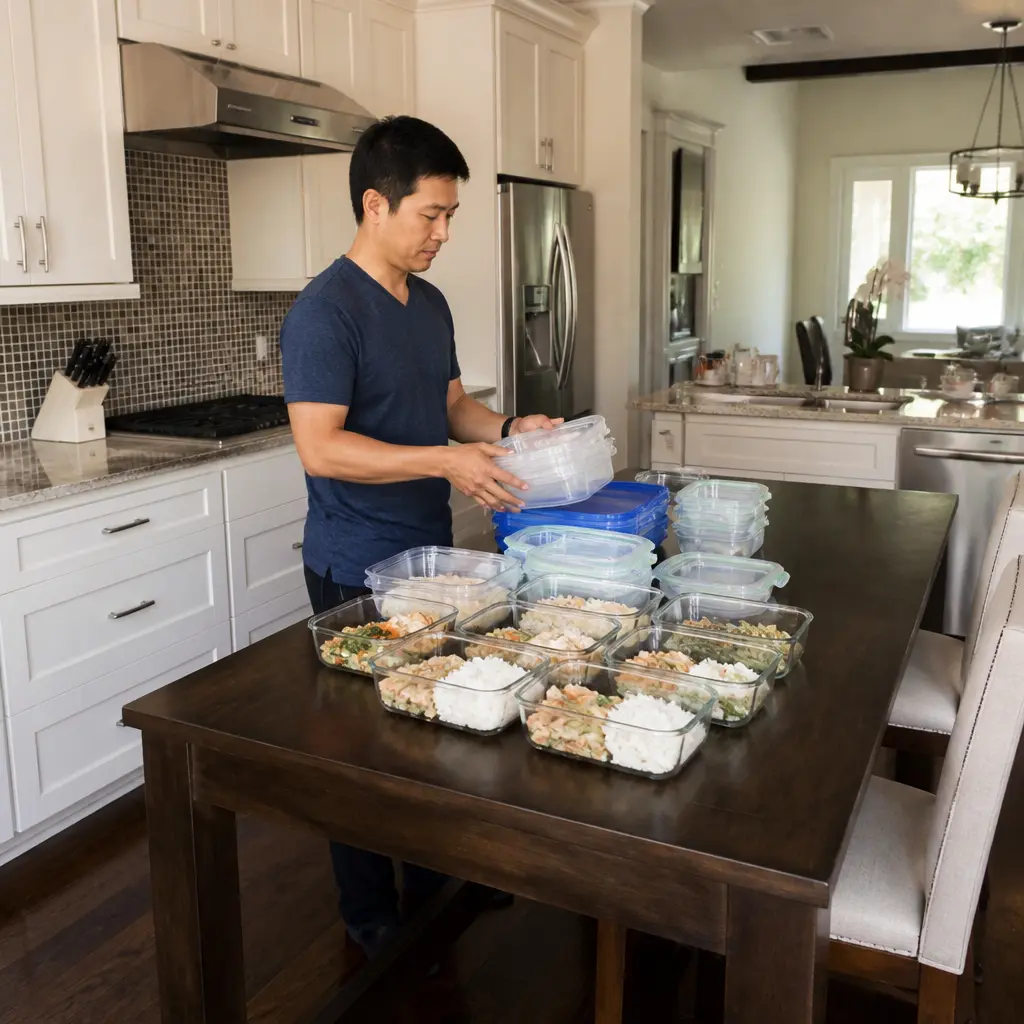
Shallow containers also help. USDA guidance recommends dividing large quantities of leftovers into shallow containers so they cool more quickly in the refrigerator. Faster cooling supports safety, while smaller portions reduce repeated reheating, which can dry meat, toughen proteins, and turn vegetables mushy.
Freezer-Safe Containers for Firmness and Moisture Control
Freezer-safe containers are designed to tolerate low temperatures without cracking, becoming brittle, or allowing excessive moisture loss. They include tempered glass labeled for freezer use, rigid polypropylene containers, heavy-duty freezer bags, and flexible silicone storage products approved for freezing.
Freezer burn is a quality problem caused by moisture leaving the food and sublimating in the frozen environment. It produces dry, leathery patches and does not necessarily make food unsafe, but it harms texture and flavor. To reduce it, remove excess air, use a close-fitting lid, wrap foods with minimal exposed surface, and leave appropriate expansion space for liquids. Never fill a rigid container completely with soup or sauce because expansion can crack the vessel or force open its seal.
The FDA and USDA emphasize that freezing preserves food safely when temperatures remain at 0°F, but freezing does not permanently preserve peak quality. Fat oxidation, ice-crystal growth, and dehydration continue slowly. Portioning food before freezing creates smaller thermal masses, speeds freezing, and makes it possible to thaw only what is needed.
Choose Food Storage Container Materials for Texture
Container material affects heat transfer, odor retention, visibility, durability, and resistance to staining. No material is automatically superior; the right choice depends on the food, storage duration, and handling conditions.
Glass Containers: Rigid, Nonporous, and Heat-Stable
Glass containers are nonporous and generally resist absorbing odors, colors, and oils. Their rigidity protects delicate foods from crushing, while their transparency makes portion identification easy. Glass is useful for layered salads, leftovers, baked dishes, and foods that move directly from refrigerator to oven when the product is specifically labeled for that transition.
Glass also changes temperature more slowly than thin plastic, which can help limit abrupt warming during refrigerator storage. Its disadvantages are weight, breakage risk, and thermal-shock damage. A cold glass container should not be placed directly on a hot surface unless the manufacturer permits it, and ordinary glass should not be assumed to be freezer- or oven-safe.
Polypropylene Plastic: Lightweight and Practical
Polypropylene, commonly identified by recycling code 5, is a lightweight plastic frequently used for reusable food containers. It is valued for durability, relatively good heat tolerance, and suitability for refrigerator and freezer storage when labeled by the manufacturer.
Plastic containers are convenient for transport and less likely to shatter, but scratches can make cleaning more difficult and may encourage odor retention. Plastic lids also warp when exposed to excessive heat. Follow the product’s microwave instructions, remove or loosen lids when directed, and replace containers that are cracked, deeply scratched, or no longer seal reliably.
Silicone and Flexible Bags: Space-Efficient Storage
Food-grade silicone bags and flexible freezer pouches conform to irregular shapes and can reduce unused air space. They are especially helpful for marinating, freezing berries or chopped vegetables, and storing small portions where rigid containers would leave large pockets of air.
Their texture-preservation performance depends heavily on the closure. A flexible bag with a weak seal can leak or admit air, while a thick, well-sealed pouch can reduce freezer dehydration. Lay liquid-filled bags flat until frozen, then stack them vertically or horizontally. This approach improves freezing speed and makes inventory easier to manage.
Match Container Design to the Food’s Texture
The most effective container choice follows a simple rule: control the food’s relationship with moisture. Foods that should remain dry need humidity barriers; foods that should remain juicy need evaporation barriers; foods that release steam need temporary ventilation; and fragile foods need physical separation.
Crisp Foods: Minimize Humidity and Contact
Store crackers, chips, cookies, toasted seeds, and cereal in clean, dry, airtight containers. Allow baked or fried foods to cool before sealing, and avoid storing them beside wet ingredients. For layered desserts, place a moisture barrier between crisp components and fillings when the recipe permits.
- Use a rigid container for fragile pieces.
- Fill the container enough to limit air movement without crushing the food.
- Keep dry foods away from refrigerator humidity unless refrigeration is specifically needed.
Fresh Produce: Balance Humidity and Airflow
Fresh produce varies widely. Leafy greens lose water quickly and benefit from a container or bag that limits dehydration while allowing some airflow. Berries can mold when trapped with surface moisture, so they need gentle handling, careful drying, and ventilation. Cut apples and pears may need an airtight container to limit browning and moisture loss, while mushrooms generally perform better when excess moisture can escape.
Ventilation holes, absorbent liners, and produce-specific drawers are useful because they manage condensation rather than simply maximizing airtightness. Do not wash produce long before storage unless it can be dried thoroughly; residual water often accelerates softening and spoilage.
Cooked Meals: Control Cooling, Separation, and Reheating
Cooked meals preserve texture best when portioned into shallow, sealed containers after cooking and cooled promptly. The USDA advises refrigerating perishable food within two hours, or within one hour when ambient temperatures exceed 90°F. Refrigerated leftovers are generally recommended for use within three to four days, subject to the food and handling conditions.
Keep crunchy toppings, fresh herbs, fried garnishes, and delicate sauces separate until serving. Reheat only the portion required, because repeated heating and cooling expose food to additional moisture loss and temperature changes. A microwave-safe vented lid can release pressure while limiting splatter, but it may not preserve a crisp crust; an oven, toaster oven, or skillet is usually better for restoring surface texture.
Delicate Foods: Add Physical Protection
Soft pastries, frosted cakes, berries, tender herbs, and soft cheeses require containers that prevent crushing. Choose a box with clearance above the food, a firm base, and a closure that does not press directly on the surface. Dividers or small cups can prevent movement during transport.
For cakes and pastries, excessive airtightness can trap condensation, while insufficient coverage causes drying. A cake carrier or rigid dome often provides a better balance than plastic wrap touching the frosting. For herbs, a container that protects stems and controls moisture can preserve crispness longer than a compressed bag.
Use a Texture-Preservation Storage Routine
Containers work best as part of a consistent storage system rather than as isolated products. The following routine combines food safety with texture control.
- Identify the desired texture: crisp, moist, firm, tender, or dry.
- Choose airtight, vented, leak-resistant, or freezer-safe construction according to that texture.
- Cool hot food enough to limit condensation, but refrigerate perishable food within the USDA time limits.
- Use shallow portions for leftovers and separate crunchy or wet components.
- Remove excess air from freezer packages while leaving expansion space for liquids.
- Label containers with the food and storage date, then place older portions where they will be used first.
- Inspect seals, lids, and container surfaces regularly and replace damaged pieces.
A useful comparison chart would place food types on one axis and container characteristics on the other: dry snacks would align with airtight rigid containers; fried foods with vented or rack-equipped containers; soups with leak-resistant shallow containers; and frozen meals with low-air, freezer-safe packaging. This framework is more reliable than choosing containers by material alone.
Conclusion: Food Storage Containers That Preserve Texture
Food storage container texture preservation depends on matching the container to the food’s moisture behavior. Airtight containers protect dry crispness, vented designs release steam from fried and baked foods, leak-resistant containers protect moist meals, and freezer-safe packaging limits dehydration and freezer burn. Glass offers rigidity and odor resistance, polypropylene offers lightweight durability, and silicone or flexible bags save space when properly sealed.
The broader lesson is that perfect texture comes from a system: control humidity, limit unnecessary air, prevent crushing, separate wet and crisp components, portion leftovers, and maintain safe temperatures. With refrigerators at 40°F or below, freezers at 0°F, prompt chilling, and containers selected by food type, households can improve eating quality while reducing avoidable food waste. Audit the containers already in your kitchen, assign each one a suitable use, and consult USDA and FDA storage guidance when handling high-risk foods or uncertain leftovers.
Sources: U.S. Department of Agriculture, Food Safety and Inspection Service, Leftovers and Food Safety, https://www.fsis.usda.gov/food-safety/safe-food-handling-and-preparation/food-safety-basics/leftovers-and-food-safety; U.S. Department of Agriculture, Food Safety and Inspection Service, Refrigeration and Food Safety, https://www.fsis.usda.gov/food-safety/safe-food-handling-and-preparation/food-safety-basics/refrigeration; U.S. Food and Drug Administration, Refrigerator Thermometers: Cold Facts about Food Safety, https://www.fda.gov/consumers/consumer-updates/refrigerator-thermometers-cold-facts-about-food-safety; U.S. Department of Agriculture, Food Loss and Waste, https://www.usda.gov/food-loss-waste; U.S. Food and Drug Administration, Food Code 2022, https://www.fda.gov/food/fda-food-code/food-code-2022