
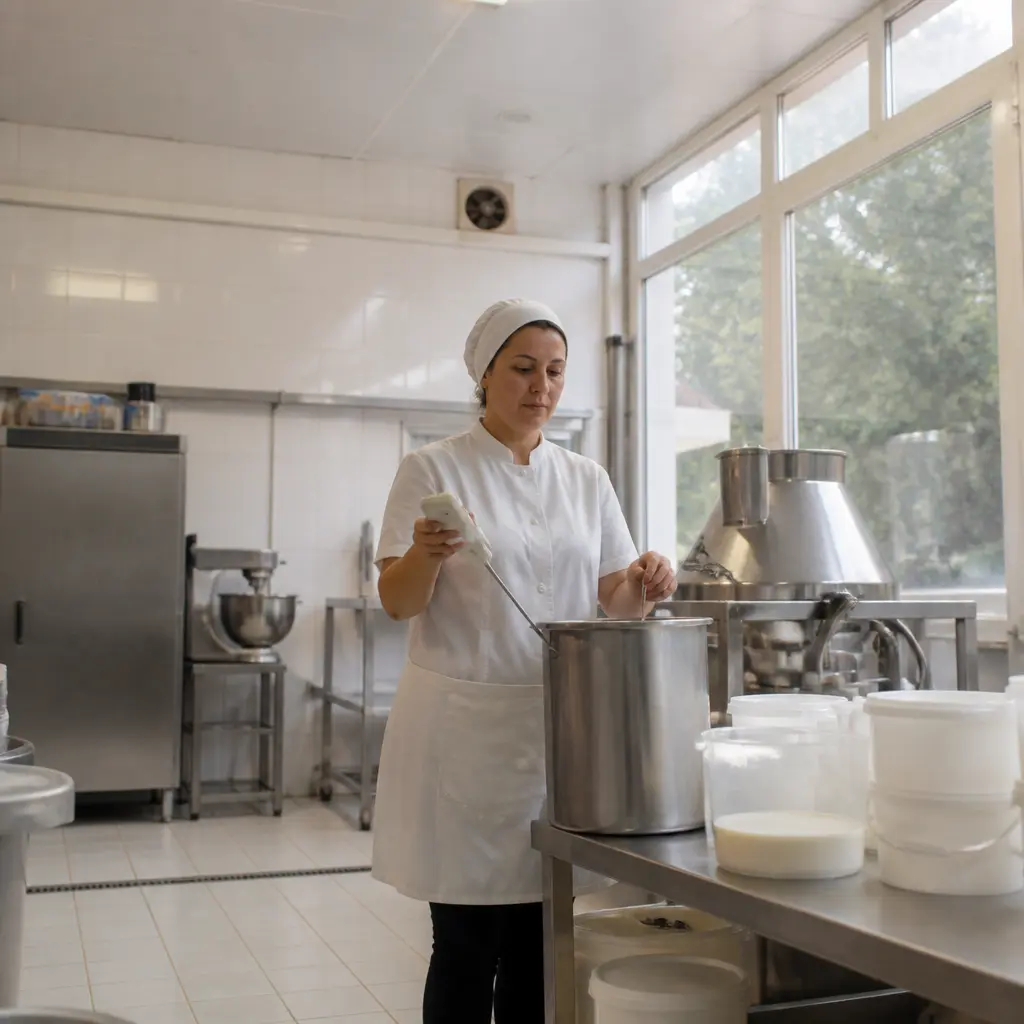
Professional gelato temperature control is the disciplined management of heat and cold across pasteurization, aging, freezing, storage, display, and service. Gelato makers typically pasteurize a dairy mix around 82–85°C, mature it at about 4°C, extract it from the batch freezer while it is still relatively soft, harden it near −18°C, and serve it warmer than conventional ice cream—often approximately −12 to −14°C. These temperature tricks matter because crystal size, air incorporation, fat behavior, food safety, and perceived flavor all change with only a few degrees of difference. Guidance from the U.S. Food and Drug Administration, Carpigiani Gelato University, the University of Guelph’s dairy-science research, and professional equipment manufacturers shows that temperature is not one setting but a connected process.
Temperature Control Defines Professional Gelato Making
The entity-attribute pairing in this article is gelato—temperature control: the deliberate use of measured temperatures to transform a formulated mix into a safe, smooth, stable, and scoopable frozen dessert. In practical terms, the pairing includes several hyponyms: pasteurization temperature, aging temperature, freezing-extraction temperature, hardening temperature, storage temperature, display temperature, and serving temperature.
A professional maker does not simply freeze gelato as cold as possible. Excessive cold can suppress aroma and make a product seem hard or dull, while insufficient cold can accelerate melting, recrystallization, and microbial risk. The International Dairy Foods Association commonly describes gelato as having substantially less incorporated air than typical American ice cream; gelato often has roughly 20–40% overrun, compared with approximately 80–100% in many ice creams. That denser structure makes temperature especially important because there is less air to soften the eating texture.
Pasteurization Temperature Protects the Mix
Pasteurization temperature is the controlled heating of a liquid gelato base to reduce vegetative pathogens while also hydrating proteins, dissolving sugars, and helping emulsifiers perform. Many professional recipes use a high-temperature, short-time process near 82–85°C, although the legally required time-temperature combination depends on the jurisdiction, equipment, recipe, and whether the mix contains dairy, eggs, or other regulated ingredients.
The U.S. Food and Drug Administration Food Code establishes regulatory standards for pasteurization of food products, but a gelato shop must follow the rules adopted by its local health authority rather than treating one recipe temperature as universal law. A maker should use a calibrated probe thermometer and record the time as well as the peak temperature. Heating to a target without holding it for the required period can fail to deliver the intended safety treatment.
The temperature also has a quality function. At roughly 80°C and above, milk proteins hydrate more effectively, sucrose and dextrose dissolve, and stabilizers begin to develop viscosity. However, overheating can produce cooked dairy notes, damage delicate flavors, or scramble egg proteins. This is why professional recipes distinguish between a dairy base, an egg custard base, and a fruit or water-based sorbet base.
Aging Temperature Builds Body Before Freezing
Aging, or maturation, is the refrigerated resting period after pasteurization and before freezing. The mix is generally cooled rapidly to approximately 4°C and held for several hours, often overnight. Carpigiani Gelato University and other professional training programs identify aging as a key step because milk proteins, stabilizers, and emulsifiers need time to bind water and develop the viscosity that supports a smooth body.
Aging at about 4°C also keeps the mix in a safer refrigerated zone while preventing premature freezing. The FDA Food Code generally requires time and temperature control for safety foods to be cooled from 57°C to 21°C within two hours and to 5°C or below within a total of six hours, subject to the applicable code and product conditions. In practice, a commercial blast chiller or efficient cooling system is preferable to leaving a hot mix in a large container inside a crowded refrigerator.
The bridge from aging to freezing is viscosity. A properly matured mix flows more slowly, traps a controlled amount of air, and forms smaller ice crystals in the batch freezer. A mix that is frozen immediately may still be edible, but it can have a thinner body, weaker emulsification, and less consistent texture.
Freezing Temperature Controls Crystal Size and Overrun
Batch freezing is the rapid removal of heat while dasher blades scrape the freezing cylinder and incorporate a measured amount of air. Water begins forming ice as the mix cools below its freezing point, but sugars, milk solids, and other dissolved ingredients depress that freezing point. Consequently, a gelato mix may begin freezing below 0°C yet leave the machine at a temperature substantially warmer than its final storage temperature.
Extraction Temperature Signals the Correct Finish
Extraction temperature is the temperature of gelato as it exits the batch freezer. Depending on formulation and machine design, professional makers often target approximately −5 to −8°C. The exact number is less important than the combined signs: the gelato should hold a clean ridge, look glossy rather than wet, and leave the cylinder without flowing like a liquid.
A lower extraction temperature is not automatically better. If the machine freezes too aggressively or runs too long, the product can become dense and icy, the dasher can overwork the mix, and the first portion may differ from the last. If extraction occurs too warm, the product may collapse in the pan, develop large crystals during hardening, and lose its intended shape. Skilled makers use temperature as a guide alongside visual texture, draw time, motor load, and the recipe’s solids content.
Mix Formulation Changes the Freezing Point
Freezing-point control is the formulation practice of balancing sugars, milk solids, fat, water, and stabilizers so the gelato remains frozen but scoopable. Dextrose, invert sugar, and some syrups depress the freezing point more strongly than sucrose, while larger quantities of sucrose increase sweetness and also affect softness. Professional recipes therefore calculate sweetness and freezing-point contribution rather than adding sugar only by taste.
Fruit sorbets usually require a different balance from dairy gelato because they contain more water and little or no fat or milk solids. A refractometer reading expressed in degrees Brix can help a maker assess soluble solids in a fruit base, although Brix alone does not fully predict firmness because different sugars have different freezing effects. A sorbet that is too low in soluble solids may freeze rock-hard; one that is too high may remain syrupy and melt quickly.
This is why copying a freezer temperature from one flavor to another often fails. Pistachio, chocolate, lemon, and raspberry bases can require different extraction and storage behavior even when produced on the same machine.
Hardening and Storage Preserve the Finished Structure
Hardening is the rapid freezing of freshly extracted gelato after it is placed in a container. The goal is to freeze remaining free water quickly, reducing the time available for ice crystals to grow. Professional hardening cabinets commonly operate around −25 to −35°C, while the gelato’s core may ultimately stabilize near −18°C or lower.
Hardening Temperature Limits Recrystallization
Recrystallization is the growth or reshaping of ice crystals during temperature fluctuation. Repeated movement between a warm display case and a cold storage freezer allows some crystals to melt and refreeze as larger crystals, producing a coarse or icy mouthfeel. Rapid hardening, shallow pans, tightly fitted lids, and minimal exposure to warm air all reduce this risk.
A useful operational chart is: freshly extracted gelato, approximately −5 to −8°C; hardening cabinet, approximately −25 to −35°C; long-term storage, approximately −18 to −20°C; and serving or display, commonly approximately −12 to −14°C. These are professional working ranges rather than universal legal requirements. The recipe, pan depth, cabinet airflow, service style, and local food code can justify different set points.
Storage Temperature Protects Quality and Safety
Storage temperature is the temperature maintained after hardening and before display. Many commercial operations store finished gelato at about −18°C or below, consistent with common frozen-food practice. The colder environment slows melting and microbial growth, but stable temperature is often more important than repeatedly setting the freezer colder and warmer.
The FDA Food Code treats frozen storage, time control, and temperature measurement as part of a broader food-safety system. A freezer thermometer should measure the actual product environment rather than relying only on the machine’s display. Staff should also track door openings, loading patterns, defrost cycles, and product temperature because air temperature can change rapidly while the gelato core changes slowly.
Display and Serving Temperature Reveal the Professional Trick
Display temperature is the temperature used in the service case, while serving temperature is the temperature at which the customer eats the gelato. Many gelato shops display product around −12 to −14°C, warmer than the approximately −18°C storage target. This makes the gelato easier to portion and allows volatile aroma compounds to reach the nose more readily.
Warmer Service Releases More Flavor
Cold suppresses sweetness and aroma perception. At a slightly warmer serving temperature, chocolate, nut, dairy, and fruit notes become more expressive, and the gelato feels creamier because less force is required to deform the ice structure. This does not mean gelato should be allowed to soften indefinitely: the case must maintain a controlled temperature and protect the product from repeated partial melting.
The ideal service temperature varies by flavor. A high-sugar fruit gelato may be soft at a temperature where a low-sugar chocolate gelato remains firm. Fat content, total solids, alcohol, fiber, and inclusions such as nuts or cookie pieces all influence the result. Experienced makers may adjust formulation, case settings, or rotation rather than expecting one temperature to suit every pan.
Display Cases Create a Balance Between Texture and Protection
A professional gelato case is designed to minimize surface exposure and maintain relatively stable product temperature. Covered wells, insulated pans, night covers, and disciplined replenishment reduce heat transfer. Open-top cases can provide visual appeal, but they expose the surface to warm air, lights, customer traffic, and condensation.
A practical service routine includes checking the product temperature with a sanitized, calibrated probe; rotating pans before the surface becomes soft; keeping lids or covers in place when possible; and never mixing a fresh batch into an older batch without a documented policy. These steps connect serving temperature to hygiene, yield, and customer perception.
Professional Temperature Troubleshooting Improves Consistency
If Gelato Is Icy
Icy gelato commonly indicates excessive free water, weak stabilizer hydration, inadequate aging, slow hardening, or temperature fluctuation. The remedy may involve balancing total solids, checking the pasteurization and aging sequence, using a faster hardening step, or inspecting freezer door seals. Lowering the storage thermostat alone may not solve a crystal-size problem that occurred during slow cooling.
If Gelato Is Too Hard
Hard gelato may have too little sugar or soluble solids, too much water, insufficient freezing-point depression, or a service case that is too cold. A maker should first verify the actual product temperature and recipe calculations before adding more sugar. Excess sweetness can damage flavor balance, so dextrose or another carefully selected sugar may be more appropriate than simply increasing sucrose.
If Gelato Melts Quickly
Rapid melting can result from a warm case, high free-water content, insufficient stabilizer function, low total solids, excessive overrun, or repeated warming during service. The cure is usually a combination of recipe analysis and equipment checks. A properly balanced gelato should soften pleasantly at service temperature while retaining enough structure to form a clean scoop.
If Results Vary Between Batches
Batch variation often comes from probe inaccuracy, inconsistent mix weights, different pan depths, overloaded hardening cabinets, or changes in draw time. Makers can improve repeatability by calibrating thermometers in an ice-water mixture, recording pasteurization and cooling times, measuring Brix for fruit bases, and logging extraction and display temperatures. The National Institute of Standards and Technology emphasizes that calibrated measurement is essential whenever temperature data are used to control a process.
A Temperature Workflow for a Professional Gelato Shop
- Heat the formulated base using a validated pasteurization program appropriate to the recipe and local regulation.
- Cool the mix rapidly to approximately 4°C, preventing prolonged residence in unsafe temperature ranges.
- Age the mix under refrigeration, commonly for several hours or overnight, while stabilizers and proteins hydrate.
- Freeze the mix in a clean, properly adjusted batch freezer and monitor texture as well as extraction temperature.
- Transfer the gelato immediately into shallow, covered pans and harden rapidly at approximately −25 to −35°C when the equipment permits.
- Store the product near −18°C or below, with minimal temperature fluctuation.
- Temper or display it around −12 to −14°C when appropriate for the flavor and case design.
- Record temperatures, cleaning, batch times, and corrective actions so quality and food safety can be verified.
The workflow demonstrates the central principle: each temperature prepares the product for the next one. Pasteurization supports safety and hydration; aging develops body; batch freezing creates the initial crystal structure; hardening preserves it; and controlled service releases flavor without allowing the product to collapse.
Conclusion: Gelato Temperature Control Is a System, Not a Single Number
The most effective professional gelato makers use temperature control as an integrated entity-attribute pairing. Pasteurization temperature protects the mix, aging temperature builds viscosity, extraction temperature signals the end of dynamic freezing, hardening temperature limits crystal growth, storage temperature preserves stability, and serving temperature determines much of the final aroma and texture. The commonly used ranges—about 82–85°C for pasteurization, 4°C for aging, −5 to −8°C at extraction, −25 to −35°C for hardening, approximately −18°C for storage, and −12 to −14°C for service—must be adapted to formulation, equipment, and local law.
For further improvement, gelato businesses should calibrate thermometers, validate their cooling and pasteurization procedures, measure fruit-base solids, record every batch, and train staff to distinguish product temperature from air temperature. Treating temperature as a documented process rather than a guess is one of the simplest ways to produce safer, smoother, and more flavorful gelato consistently.
Sources: U.S. Food and Drug Administration, Food Code 2022, https://www.fda.gov/food/fda-food-code/food-code-2022; Carpigiani Gelato University, Gelato Production and Process Training Materials, https://www.gelatouniversity.com/; International Dairy Foods Association, Ice Cream and Frozen Dessert Industry Information, https://www.idfa.org/; University of Guelph, Dairy Science and Ice Cream Technology Research, https://www.uoguelph.ca/foodscience/; National Institute of Standards and Technology, Temperature and Humidity Measurement, https://www.nist.gov/