Seasonal stone fruits are peaches, nectarines, plums, apricots, cherries, and related hybrids whose flavor, aroma, acidity, and color are strongest during their natural harvest window. In gelato, these fruits shine brightest when ripe fruit is processed quickly, balanced with sugar and acid, and paired with a formulation that preserves fresh flavor rather than masking it. The United States Department of Agriculture (USDA) identifies summer as the principal domestic harvest period for many tree fruits, while gelato-making practice shows that fruit maturity, soluble-solids level, water content, and processing method determine whether a seasonal flavor tastes vivid or diluted. Peaches and nectarines generally offer the most recognizable summer profile; plums and cherries contribute sharper acidity and color; apricots provide concentrated fragrance; and pluots extend the category with plum-like intensity and apricot sweetness.
Perform best: seasonal stone fruits in gelato
“Seasonal stone fruits in gelato” describes a flavor category in which ripe drupes—the botanical term for fruits with a single hard pit—are used during or near their peak harvest to create frozen desserts with a clear, fruit-led identity. The International Dairy Foods Association describes gelato as a frozen dairy dessert typically distinguished from American-style ice cream by lower overrun and a dense, smooth texture, although recipes vary by region and producer. Within that format, the attribute “seasonal” means more than calendar timing: it implies fruit selected for maturity, aroma, acidity, and eating quality.
The principal hyponyms are peach gelato, nectarine gelato, plum gelato, apricot gelato, cherry gelato, and hybrid-fruit gelato such as pluot or aprium. These varieties do not behave identically. Peaches and nectarines commonly provide a soft floral aroma; plums bring acidity, tannin, and deep red or purple pigments; apricots are intensely aromatic but can taste flat when underripe; and cherries offer a firm acid-sweet structure that remains recognizable after freezing.
This distinction matters because freezing suppresses perceived sweetness and aroma. The Institute of Culinary Education and professional gelato texts commonly emphasize balancing fruit purée with sugars and solids rather than simply adding more sugar. A ripe, flavorful fruit therefore gives the maker more usable character at a lower level of correction. The result is a cleaner flavor, softer texture, and shorter ingredient list.
Peach and nectarine gelato: the benchmark summer profiles
Peach and nectarine gelato are fruit-forward frozen desserts made from ripe yellow, white, or low-acid stone fruit. Peaches have fuzzy skin and often a rounded floral flavor, while nectarines are smooth-skinned and can deliver a brighter, sometimes firmer fruit note. Their shared advantage is familiarity: consumers readily recognize the aroma even when the fruit is served cold.
The USDA tracks peaches and nectarines as major U.S. tree-fruit crops, with California historically accounting for the overwhelming majority of domestic production. The California Department of Food and Agriculture has also identified the state as a leading source of U.S. peaches, nectarines, plums, and related fruit. For gelato, regional abundance supports a practical peak-season model: buy ripe local fruit during the summer crop, purée it promptly, and freeze or preserve the base when quality is highest.
White peaches can be delicate and highly aromatic, while yellow peaches usually contribute stronger acidity and a more robust cooked-fruit note. Nectarines are especially useful when a maker wants peach-like flavor with smooth-skin processing and less labor. Roasting can intensify sweetness and color, but it changes the profile from fresh and floral to jammy and caramelized, so the treatment should match the intended style.
Plum and pluot gelato: acidity, color, and contrast
Plum gelato is made from red, black, green, or yellow plums, while pluot gelato uses a plum-apricot hybrid. These fruits are valuable because their acidity creates contrast against the richness of a dairy base. Dark-skinned plums can also contribute anthocyanin pigments, producing naturally vivid red-violet tones, although color varies with cultivar, ripeness, oxidation, and heat exposure.
Plums are often more forgiving than delicate peaches in a frozen application because their sharper flavor remains noticeable at low temperature. Their skins, however, may add bitterness or astringency. Straining the purée can create a smoother product, while retaining some skin can strengthen color and complexity. Pluots typically occupy the middle ground: they may have apricot-like perfume, plum-like acidity, and a denser flavor than either parent fruit alone.
A useful practical indicator is soluble solids, commonly measured in degrees Brix. Brix does not equal perceived sweetness in a finished gelato because acids, aromatics, and freezing affect perception, but a higher reading often signals more concentrated fruit solids. A refractometer reading can help a maker compare batches and adjust the recipe consistently rather than relying only on taste.
Apricot gelato: fragrance over sheer sweetness
Apricot gelato is a frozen dessert centered on the fruit’s distinctive floral, honeyed, and lightly tart aroma. Apricots are smaller than peaches and often contain less water by weight, so their flavor can become remarkably concentrated when fully ripe. Their orange color comes partly from carotenoid pigments, which are generally more stable than many red fruit pigments but can still fade through oxidation and prolonged exposure to heat or light.
The challenge is uneven maturity. An underripe apricot may be hard, acidic, and weakly aromatic; an overripe one can be soft and bruised, with fermented notes. The best gelato fruit is ripe enough to smell strongly and yield slightly to pressure without showing spoilage. Brief roasting or poaching may improve consistency across a variable crop, but excessive heat can drive off the volatile compounds that make apricot distinctive.
Cherry gelato: a high-impact balance of acid and sweetness
Cherry gelato uses sweet cherries, sour cherries, or a blend of both. Sweet cherries bring dark-fruit richness, while sour cherries supply pronounced acidity and a more refreshing finish. Because cherries have a strong natural identity, they can support either a water-based sorbetto or a dairy gelato, although the balance of sugar and acid must be recalculated for each format.
The USDA distinguishes sweet and tart cherries in its agricultural reporting, and Michigan State University Extension has documented the importance of Michigan and other North American regions in tart-cherry production. This geographic concentration makes harvest timing especially meaningful: a short local crop can produce exceptional fresh flavor, while frozen or canned cherries can provide consistency outside the season.
Cherry pits must be removed carefully, and any pit fragments are a food-safety hazard. The fruit’s color can also change during processing. Acidic conditions usually help preserve red tones, whereas oxygen, heat, and metal contact may dull them. A maker seeking a natural cherry profile should evaluate the purée after freezing, not only at room temperature.
Balance texture: seasonal stone fruits meet gelato formulation
Sugar, water, and freezing point
Fruit contributes water, natural sugars, fiber, acids, and flavor compounds. Adding sucrose, dextrose, glucose syrup, or other sugars changes both sweetness and freezing point. Too little dissolved sugar can produce a hard, icy gelato; too much can create a soft, sticky product that tastes cloying. Gelato makers therefore balance sweetness and freezing behavior together, often using sweetness and freezing-point calculations known in the trade as POD and PAC.
Fruit acidity is equally important. A peach base may need lemon juice or another acid to sharpen its flavor, while a sour-cherry or plum base may require little additional acid. The correct level is the point at which the fruit tastes lively without becoming harsh. Tasting the mix both before and after freezing is essential because cold temperatures reduce sweetness and alter aroma release.
Dairy base, sorbetto, and inclusions
A dairy gelato base adds milk proteins and fat, which can soften acidity and create a rounder mouthfeel. This pairing works especially well with peach, nectarine, and apricot. A sorbetto base lets plum, cherry, and intensely flavored apricot remain more direct, but it requires careful control of solids to avoid iciness.
Fruit pieces, swirls, and variegates should be treated as separate formulation elements. A frozen peach cube can become hard if it contains too much free water, while a plum ripple may remain soft because of its sugar concentration. The Culinary Institute of America and professional frozen-dessert training programs commonly stress particle size, solids, and serving temperature as key contributors to perceived texture.
Preserve quality: harvest timing and processing practice
From peak harvest to purée
Stone fruits are climacteric commodities to varying degrees, meaning some can continue ripening after harvest through respiration and ethylene activity. That does not guarantee full flavor development after picking. Fruit harvested too early may soften without developing the same aroma, acidity balance, or sweetness as tree-ripened fruit. For gelato, the best purchasing specification is therefore sensory ripeness rather than softness alone.
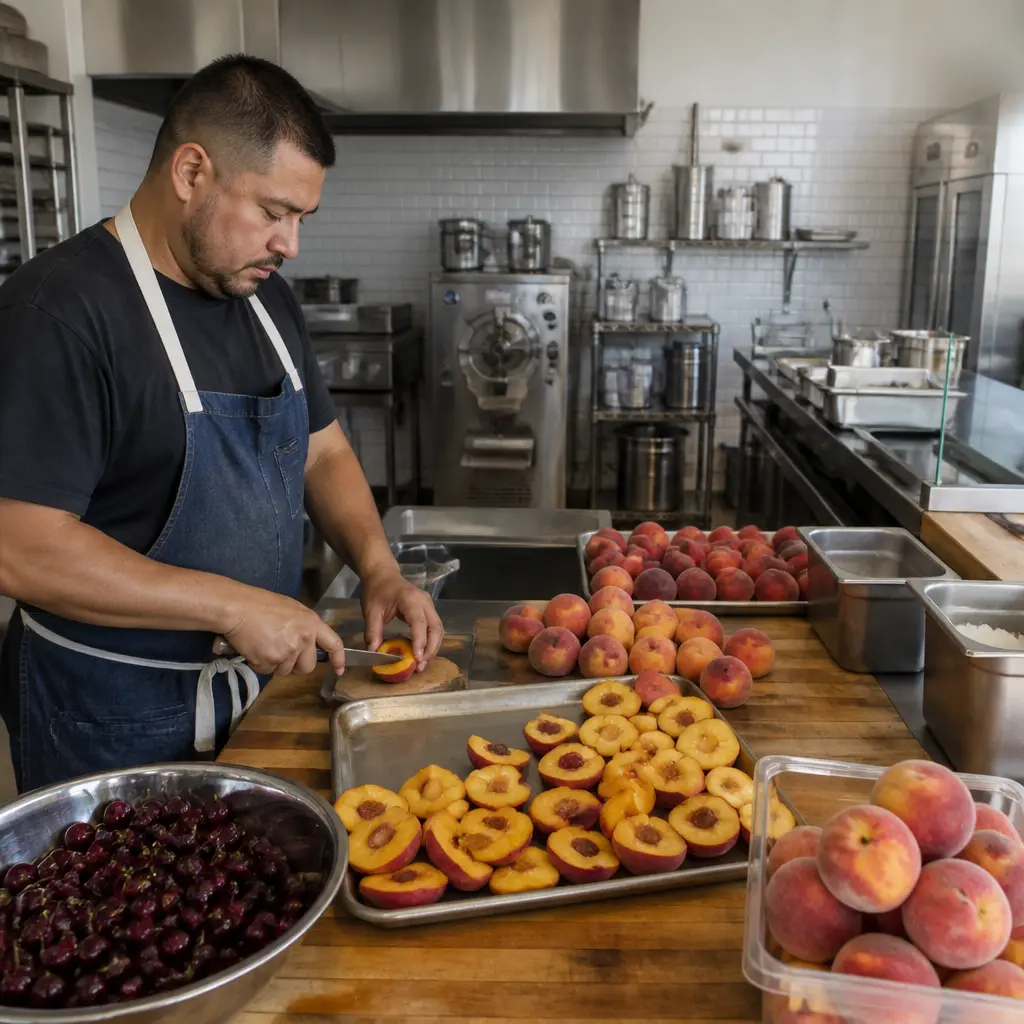
A practical workflow is to sort fruit, remove damaged pieces, wash it, pit it, and process it rapidly. Oxidation can be limited through cold handling, controlled exposure to air, and appropriate acid balance. If the crop is abundant, freezing ripe purée in measured portions can extend the season while retaining more character than storing whole fruit for too long.
A yearly rotation for shops and home makers
- Late spring to early summer: apricot, early cherry, and early peach varieties.
- Mid-summer: peach, nectarine, plum, pluot, and peak sweet cherry.
- Late summer: late peaches, late plums, apriums, and selected tart cherries.
- Autumn and winter: frozen, canned, dried, or preserved stone fruit used with transparent labeling about its origin and format.
This rotation is not identical in every region. The USDA hardiness and crop calendars, state extension services, and local growers provide better timing than a national calendar alone. A shop can also document each batch with harvest date, cultivar, Brix, acidity, and processing method. Such records turn “seasonal” from a marketing claim into a repeatable quality-control practice.
Conclusion: seasonal stone fruits deliver the clearest gelato character
Seasonal stone fruits perform best in gelato when their individual attributes guide the recipe. Peach and nectarine provide familiar floral summer flavor; plum and pluot add acidity and color; apricot contributes concentrated fragrance; and cherry supplies high-impact sweet-tart character. The strongest results come from ripe fruit, rapid processing, measured soluble solids, balanced acidity, and a formulation designed for freezing rather than ordinary table service.
For gelato professionals and home makers, the broader lesson is to treat the crop calendar as a flavor-development tool. Taste fruit at harvest, record Brix and recipe adjustments, compare dairy and sorbetto formats, and preserve surplus at peak quality. Further reading from the USDA, university extension programs, and professional frozen-dessert organizations can help match local harvest conditions with reliable formulation decisions.
Sources: U.S. Department of Agriculture, National Agricultural Statistics Service, Noncitrus Fruits and Nuts Summary, https://www.nass.usda.gov/Publications/Todays_Reports/reports/ffruit.pdf; California Department of Food and Agriculture, California Agricultural Statistics Review, https://www.cdfa.ca.gov/Statistics/; Michigan State University Extension, Tart Cherry Production and Management Resources, https://www.canr.msu.edu/cherries/; International Dairy Foods Association, Ice Cream and Frozen Dessert Resources, https://www.idfa.org/; Institute of Culinary Education, Gelato and Frozen Dessert Education Resources, https://www.ice.edu/; U.S. Food and Drug Administration, Fresh Produce Safety, https://www.fda.gov/food/consumers/what-you-need-know-about-produce-safety; Culinary Institute of America, Professional Baking and Frozen Dessert Resources, https://www.ciachef.edu/