
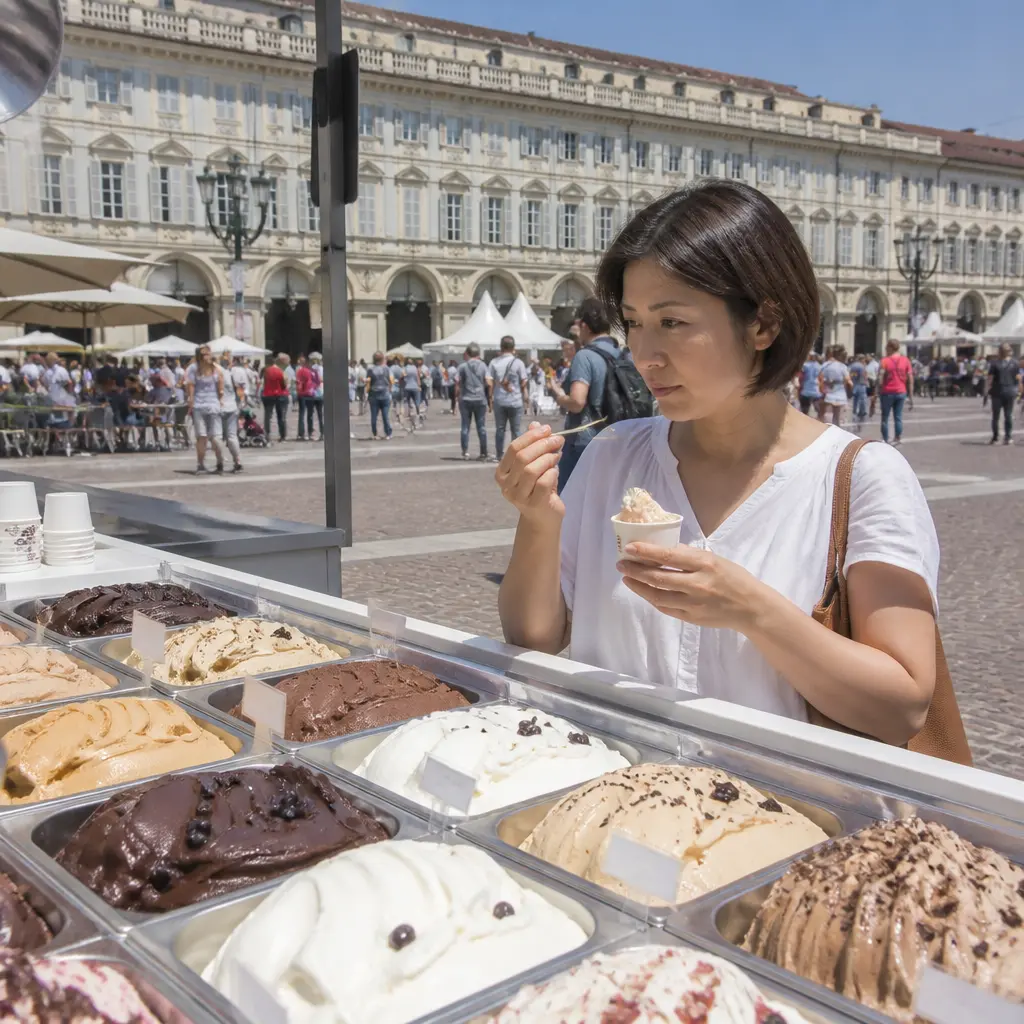
Chocolate gelato’s regional variety is the way local ingredients, climate, technique, trade, and food memory produce distinct interpretations of a dense frozen chocolate dessert. Italy’s gianduia may combine cocoa with Piedmont hazelnuts, Sicily’s chocolate can draw on the stone-ground traditions of Modica, Japan often emphasizes carefully calibrated cocoa bitterness and matcha-compatible sweetness, while Argentina and the United States adapt chocolate gelato to their own dairy, confectionery, and serving cultures. This matters because gelato is not a single standardized flavor: the International Dairy Foods Association describes ice cream and frozen desserts as a major household pleasure in the United States, while industry organizations such as SIGEP and the Carpigiani Gelato Museum document tens of thousands of Italian gelaterias and a global craft tradition built around local variation.
How regional traditions shape chocolate gelato’s regional variety
“Chocolate gelato regional variety” is an entity–attribute pairing in which the entity is chocolate gelato and the attribute is its geographically distinctive expression. The pairing describes more than a flavor label: it includes the cocoa source, fat and sugar balance, production method, texture, customary accompaniments, and cultural setting associated with a place. Food historian Massimo Montanari defines food culture broadly through the relationship between ingredients, techniques, and social practices, a useful framework for understanding why two chocolate gelatos can share cocoa yet taste entirely different.
The main hyponyms of this pairing include Italian dark chocolate gelato, Piedmontese gianduia gelato, Sicilian Modica-style chocolate gelato, Spanish and Latin American chocolate preparations, Japanese craft chocolate gelato, and American premium chocolate ice cream or gelato. Their differences are shaped by measurable variables: cocoa percentage, milk or cream content, quantity of added sugar, use of nut pastes, incorporation of starches or egg yolks, serving temperature, and overrun, meaning the amount of air incorporated during freezing.
Cocoa intensity and texture
Cocoa intensity is the perceived balance of chocolate aroma, bitterness, acidity, roast, and sweetness. Gelato usually contains less air and is served slightly warmer than conventional ice cream, so its flavor can feel denser and more immediate. The Carpigiani Gelato Museum identifies lower overrun and a softer serving temperature as important distinctions in traditional gelato production, although recipes vary considerably.
A dark Italian cioccolato gelato may emphasize cocoa powder and dark chocolate for a clean, bittersweet profile. A richer American-style formulation may rely on chocolate liquor, cream, egg yolks, or inclusions such as brownie pieces. These are not absolute national rules; they are regional tendencies produced by available ingredients and consumer expectations. The International Cocoa Organization’s annual cocoa statistics, which track millions of tonnes of global cocoa production, also help explain why chocolate styles evolve through international supply chains rather than purely local agriculture.
Milk, cream, and the meaning of “rich”
Richness in chocolate gelato can mean high dairy fat, concentrated cocoa solids, a smooth nut paste, or simply a powerful flavor that persists after tasting. Traditional gelato is often described as milk-forward rather than cream-dominant, while premium ice cream commonly uses more cream and therefore more fat. Fat carries aromatic compounds and contributes body, but excessive fat can mute cocoa’s sharper roasted notes.
Regional recipes therefore use different routes to richness. Northern Italian recipes may add hazelnut paste; Sicilian recipes may build body with chocolate, sugar, and regional thickening traditions; Japanese makers may use high-quality couverture chocolate while keeping sweetness restrained. Comparing only fat percentage misses these differences because cocoa solids, nut oils, milk proteins, and serving temperature all affect the experience.
Italy’s chocolate gelato varieties reflect local ingredients and technique
Italy is the central reference point for modern gelato culture, but its chocolate varieties are regional rather than uniform. SIGEP and the Italian trade association AIG document a large professional network of gelaterias, while the Carpigiani Gelato Museum presents gelato as a historical craft that developed through changes in refrigeration, ingredients, and commercial production. The result is a family of styles connected by technique but differentiated by local identity.
Piedmont: gianduia and hazelnut-chocolate gelato
Gianduia is a chocolate-and-hazelnut confection associated with Piedmont, particularly Turin. Its defining attribute is the integration of finely milled hazelnuts or hazelnut paste into chocolate, creating a rounder, oilier, and more aromatic gelato than a plain cocoa recipe. Piedmont’s famed Tonda Gentile Trilobata hazelnut is protected under a European geographical indication, demonstrating how agricultural provenance can become part of a dessert’s identity.
The regional logic is practical as well as cultural. Hazelnuts add fat and solids, which contribute creaminess without relying only on dairy cream. Gianduia gelato commonly tastes less austere than very dark chocolate gelato because roasted nut sweetness softens cocoa bitterness. It is therefore a clear example of an attribute pairing in which place changes both flavor and texture.
Sicily: Modica-style chocolate and almond-compatible profiles
Sicilian chocolate traditions are often linked with the city of Modica, where chocolate is traditionally processed at relatively low temperatures so that sugar crystals remain perceptible. Modica chocolate has a protected geographical indication in the European Union. A gelato inspired by this style may feature a slightly grainier or more crystalline impression than a fully refined chocolate gelato, although professional makers may adapt the texture for freezing and serving.
Sicilian gelato also exists within a broader culinary landscape of almonds, pistachios, citrus, and brioche. Consequently, chocolate gelato served in Sicily may be paired with toasted nuts, candied orange, or a warm brioche rather than treated as an isolated flavor. The regional distinction lies in the combination of chocolate with Mediterranean ingredients and textural contrasts.
Central and southern Italy: dark chocolate, chocolate-hazelnut, and pastry influences
Across Rome, Naples, Florence, and other cities, chocolate gelato commonly appears as a dark, smooth flavor alongside stracciatella, zabaglione, coffee, or nut-based varieties. Local pastry traditions influence additions such as espresso, candied fruit, biscuits, or liqueur. In Naples, for example, chocolate flavors may be presented within a dessert culture that values intense coffee, roasted nuts, and creamy pastries.
These variations show why regional classification should be treated as a spectrum. A gelateria may use Italian technique while incorporating Venezuelan cocoa, Belgian couverture, or locally sourced milk. “Italian” can describe the production tradition, the shop’s location, or the style of texture, and those meanings do not always coincide.
Chocolate gelato changes across Europe and the Americas
Outside Italy, chocolate gelato develops through the interaction of Italian-style technique with established regional dessert preferences. European recipes often emphasize couverture chocolate and restrained sweetness, while Latin American versions may connect chocolate with dulce de leche, cinnamon, coffee, or tropical ingredients. In the United States, the boundary between gelato and premium ice cream is especially fluid because shops may use the word gelato for a broad range of dense, scoopable frozen desserts.
Spain: chocolate with pastry and Mediterranean accents
Spanish chocolate gelato often sits within a dessert culture shaped by churros, crema catalana, almonds, olive oil, citrus, and coffee. A shop may use dark chocolate as a base and add orange, cinnamon, toasted almond, or a churro-inspired ripple. The resulting profile can be more aromatic and spiced than a minimalist Italian cioccolato.
Spain also illustrates the effect of tourism on frozen desserts. Gelaterias serve international visitors, so local recipes frequently coexist with globally familiar stracciatella, pistachio, and chocolate-hazelnut flavors. Regional identity is preserved through ingredients and presentation rather than through a single fixed formula.
Argentina: chocolate, dulce de leche, and Italian immigration
Argentina has a strong helado artesanal tradition shaped in part by Italian immigration. Chocolate gelato is commonly paired with dulce de leche, a cooked milk-and-sugar preparation that adds caramelized sweetness and a sticky, luxurious texture. Some versions combine dark chocolate with dulce de leche granizado, using chocolate flakes or chips to create contrast.
This pairing demonstrates how a regional variety can be defined by a companion ingredient rather than by cocoa alone. The chocolate supplies bitterness and roast, while dulce de leche supplies milk solids, caramel notes, and sweetness. Argentine helado therefore tends toward an indulgent, confectionery profile that differs from a leaner dark-chocolate gelato.
The United States: premium chocolate and mix-in culture
American chocolate gelato and premium ice cream often emphasize abundance: extra chocolate, fudge ribbons, brownie pieces, cookies, caramel, or chocolate-coated nuts. The United States Department of Agriculture and the International Dairy Foods Association track a large domestic market for dairy-based frozen desserts, helping explain why commercial expectations strongly influence portion size, inclusions, and flavor naming.
Compared with a traditional Italian gelato, an American premium chocolate product may contain more cream, more visible inclusions, or a higher total sweetness. Its richness is often communicated visually through chunks and swirls as well as through the base. The style is not less sophisticated; it reflects a different definition of indulgence and a market accustomed to layered dessert formats.
Japan and Asia reinterpret chocolate gelato through balance
Japanese chocolate gelato often reflects a preference for precision, clean flavor separation, and controlled sweetness. Makers may highlight the origin of cocoa, pair chocolate with matcha, black sesame, kinako, yuzu, or roasted tea, and use refined presentation. These combinations are not simply novelty flavors: they connect chocolate’s bitterness with ingredients that already have established culinary significance in Japan.
Japan: cocoa with matcha, tea, and yuzu
Matcha-chocolate gelato joins two bitter ingredients, so the recipe depends on careful control of sugar and fat. Too much sweetness can flatten matcha’s vegetal character, while too little can make cocoa and tea harsh. Yuzu introduces acidity and citrus aroma, which can brighten a dense chocolate base in much the same way that orange or raspberry does in European pastry.
Japanese specialty shops also tend to foreground provenance, seasonality, and visual restraint. A small serving can feel intense because the product is designed around aroma and finish rather than a large number of mix-ins. This is a regional expression of richness based on concentration and balance.
South and Southeast Asia: chocolate beside spice and tropical flavor
In South and Southeast Asian markets, chocolate gelato may be paired with cardamom, chili, coconut, mango, coffee, or black sesame. These combinations reflect both local flavor systems and the availability of tropical ingredients. Coconut can replace or supplement dairy in some formulations, while spices add aroma without requiring additional sugar.
Climate also affects the eating experience. In warmer regions, a gelato must resist rapid melting while remaining soft enough to scoop. Balancing sugars, milk solids, stabilizers, and serving temperature becomes a technical requirement, not merely a preference. The same recipe can therefore feel different when served in a humid tropical city and a cool Alpine town.
A practical comparison of regional chocolate gelato styles
The following text-based comparison chart summarizes common tendencies. It is a guide to style rather than a legal or universal classification, because individual gelaterias may use imported ingredients and hybrid recipes.
- Piedmont, Italy: chocolate with hazelnut paste; rounded roast, nut aroma, and a particularly creamy body.
- Sicily, Italy: chocolate influenced by Modica traditions, almonds, pistachios, citrus, or brioche; pronounced texture and Mediterranean pairings.
- Central and southern Italy: dark chocolate, coffee, pastry, and liqueur associations; smooth, cocoa-led profiles.
- Spain: chocolate with cinnamon, orange, almond, olive oil, or churro-inspired elements; aromatic and pastry-oriented.
- Argentina: chocolate with dulce de leche and chocolate flakes; sweet, caramelized, and highly indulgent.
- United States: chocolate with brownies, fudge, cookies, caramel, or nuts; high-impact inclusions and dessert layering.
- Japan: chocolate with matcha, tea, yuzu, black sesame, or carefully selected couverture; restrained sweetness and precise balance.
Why regional chocolate gelato matters to food culture and trade
Regional chocolate gelato matters because it makes globalization visible in a single scoop. Cocoa is usually traded internationally, dairy may be local, nuts can carry protected geographical status, and the production method may derive from Italian gelato technology. The finished dessert is therefore both local and global.
It also matters economically. The gelato sector supports agricultural suppliers, pastry professionals, equipment manufacturers, tourism businesses, and small retailers. Trade fairs such as SIGEP report a large international professional audience, while the Carpigiani Gelato Museum preserves historical equipment and recipes as part of culinary heritage. These institutions show that gelato is not only a dessert category but also a network of craft knowledge and commerce.
How to evaluate a regional chocolate gelato
A useful tasting method separates base, aroma, texture, and finish. First identify whether the cocoa tastes roasted, fruity, earthy, or intensely bitter. Next assess whether richness comes from dairy, chocolate solids, nuts, or inclusions. Then note airiness, smoothness, crystal size, and melting speed. Finally, identify the regional signal: hazelnut in Piedmont, citrus or pistachio in Sicily, dulce de leche in Argentina, or tea and yuzu in Japan.
- Taste the plainest chocolate flavor available before trying heavily decorated versions.
- Ask the maker about cocoa origin, chocolate percentage, dairy content, and local ingredients.
- Compare serving temperature and texture, not just sweetness.
- Try a regional pairing, such as gianduia, chocolate and orange, or chocolate and dulce de leche.
Chocolate gelato is best understood as a map of techniques and tastes rather than a single standardized product. Its regional variety emerges from the interaction of cocoa intensity, dairy structure, local ingredients, climate, and cultural habits. Piedmont adds hazelnut depth, Sicily contributes distinctive chocolate and Mediterranean associations, Argentina layers in dulce de leche, the United States embraces mix-ins, and Japan pursues balance with tea and citrus. Readers can explore this diversity by visiting independent gelaterias, asking about ingredient provenance, and comparing plain chocolate bases before moving to specialty combinations.
Sources: Carpigiani Gelato Museum, “The History of Gelato,” https://www.gelatomuseum.com/en/; SIGEP, “The World’s Leading Artisan Gelato, Pastry, Bakery and Coffee Show,” https://www.sigep.it/en; International Cocoa Organization, “Cocoa Statistics,” https://www.icco.org/statistics/; European Commission, “Tonda Gentile Trilobata delle Langhe Protected Geographical Indication,” https://agriculture.ec.europa.eu/farming/geographical-indications-and-quality-schemes/geographical-indications-register/; European Commission, “Cioccolato di Modica Protected Geographical Indication,” https://agriculture.ec.europa.eu/farming/geographical-indications-and-quality-schemes/geographical-indications-register/; International Dairy Foods Association, “Ice Cream and Frozen Dessert Trends,” https://www.idfa.org/; U.S. Department of Agriculture Economic Research Service, “Dairy Data,” https://www.ers.usda.gov/data-products/dairy-data/; Massimo Montanari, Food Is Culture, Columbia University Press, https://cup.columbia.edu/book/food-is-culture/9780231137904/