
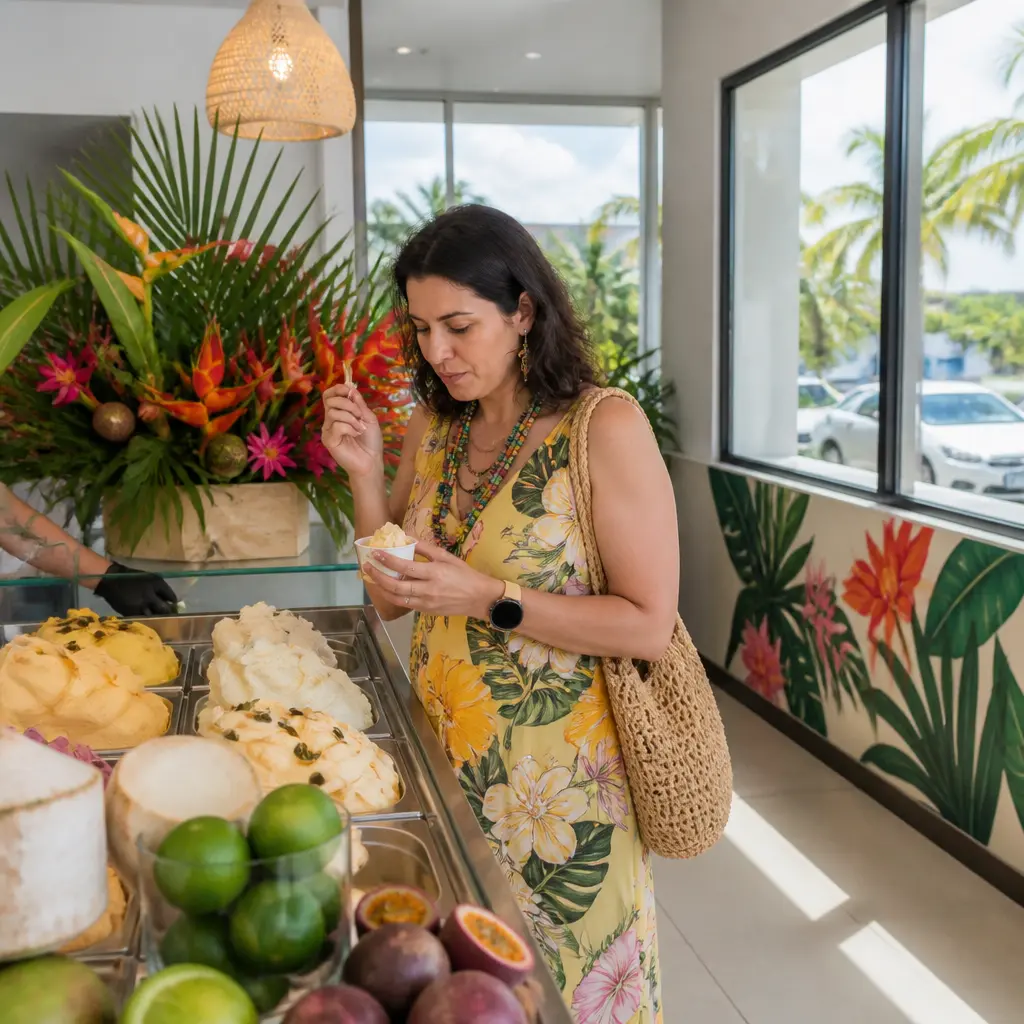
Gelato flavor innovation is the practice of developing, testing, and refining frozen desserts around distinctive ingredients, cultural cues, and sensory contrasts. Within that field, “unexpected wins” describe flavors that initially seem niche—such as coconut lime or passion fruit—but outperform expectations because they combine familiarity, freshness, visual appeal, and strong repeat-purchase potential. This matters as consumers increasingly seek premium, adventurous, and shareable food experiences: the International Dairy Foods Association identifies ice cream and frozen desserts as a major U.S. category, while Innova Market Insights continues to report that novelty, tropical fruit, and global inspiration shape new-product development. Coconut lime and passion fruit gelato demonstrate how a carefully balanced flavor can turn surprise into commercial appeal.
Unexpected Wins as a Gelato Flavor Innovation Attribute
An entity-attribute pairing connects a subject with a defining quality. In this case, the entity is gelato flavor innovation, and the attribute is unexpected success. The pairing can be defined as the ability of a gelato concept to exceed initial expectations in consumer interest, sales, reviews, or repeat purchases despite not being an obvious mainstream choice.
This definition includes several related hyponyms: an unexpected flavor win may be a premium flavor win, a seasonal flavor win, a social-media win, a limited-edition win, or a cross-cultural flavor win. These categories overlap, but they reveal different reasons a product succeeds. A limited flavor may create urgency, while a premium flavor may justify a higher price. A tropical flavor may succeed because it offers an escape from familiar chocolate and vanilla profiles.
Novelty with Familiar Sensory Anchors
Novelty with familiar sensory anchors means combining an unusual headline ingredient with tastes consumers already understand. Coconut lime illustrates the principle: coconut contributes creamy, mellow, and recognizable notes, while lime supplies acidity and aromatic lift. The result feels new without requiring consumers to learn an entirely unfamiliar flavor language.
Food scientists commonly describe acceptance as a balance between “neophobia,” or hesitation toward unfamiliar foods, and “neophilia,” or the desire to explore them. Coconut lime reduces neophobia through its recognizable base ingredients while preserving enough contrast to feel distinctive. The contrast is particularly useful in gelato, where a rich dairy or coconut base can become heavy unless acidity, citrus aroma, or a lightly bitter note provides structure.
Premium Perception Through Ingredient Contrast
Premium perception is the consumer belief that a product offers elevated quality, craft, or sensory complexity. In gelato, premium positioning can come from ingredient provenance, visible inclusions, small-batch production, or a flavor architecture that changes across the palate. Coconut lime can signal premium quality when it uses real lime zest, fresh juice, toasted coconut, or a carefully made coconut cream base rather than generic flavoring alone.
The International Dairy Foods Association has emphasized the continuing importance of indulgence and innovation in frozen desserts. That combination is significant: consumers may want a treat, but they increasingly expect the treat to offer a story, a point of difference, or a memorable sensory experience. A bright citrus note can make a rich product seem more balanced, allowing a gelato shop to present indulgence as refreshing rather than merely heavy.
Limited-Edition and Seasonal Flavor Wins
A limited-edition flavor is a product offered for a defined period or in restricted quantities. Scarcity encourages trial because consumers know that postponing a purchase may mean missing the opportunity. Seasonal timing also gives an unexpected flavor a natural context: coconut lime can suit summer menus, while passion fruit can support warm-weather launches, tropical promotions, or travel-themed campaigns.
Limited releases are especially useful when a flavor is unfamiliar. A shop does not need to convince every customer to adopt passion fruit permanently; it only needs to create enough curiosity for first purchase, sampling, or social sharing. Sales teams can then evaluate unit velocity, customer comments, reorder rates, and pairing performance before making the flavor a permanent offering.
Coconut Lime Gelato as a Balanced Tropical Flavor
Coconut lime gelato pairs a creamy tropical base with an acidic citrus accent. Coconut supplies body and a soft, fatty mouthfeel, while lime contributes volatile aromas and a sharp finish. In formulation terms, the flavor succeeds when the two components remain legible: too much coconut can mute the lime, while excessive lime can create sourness that overwhelms the creamy base.
Why Coconut Lime Feels Both New and Accessible
Coconut lime occupies a useful middle ground between conventional dessert flavors and adventurous global profiles. Coconut is familiar from cakes, candies, curries, and beverages; lime is familiar from pie, soda, salsa, and cocktails. Their combination therefore feels like an extension of existing food memories rather than a completely unknown proposition.
The flavor also benefits from sensory contrast. Sweetness and creaminess create comfort, while lime gives the finish energy. This contrast can improve perceived refreshment and reduce palate fatigue, a valuable characteristic in a category where customers may sample several flavors in one visit.
Formulation Signals That Support Quality
A credible coconut lime gelato usually depends on more than adding two flavor labels to a neutral base. Producers may use coconut milk, coconut cream, toasted coconut, lime zest, lime juice, or a lime ripple. Each choice changes the result: zest emphasizes aroma, juice increases acidity, toasted coconut adds caramelized depth, and a ripple creates visible movement in the display case.
The U.S. Food and Drug Administration distinguishes between food ingredients used for flavor, color, texture, and preservation, reinforcing the importance of ingredient function in product development. For a successful gelato, flavor intensity must also be coordinated with sugar, fat, water, and stabilizer levels because freezing reduces the perception of sweetness and changes how aromas are released.
Passion Fruit Gelato as an Adventure-Driven Flavor
Passion fruit gelato is a fruit-forward frozen dessert built around the aromatic, tart, and floral character of passion fruit. Compared with more familiar berries or stone fruits, passion fruit offers a sharper sensory identity: its acidity arrives quickly, its aroma is highly distinctive, and its seeds can provide a visually recognizable cue when used intentionally.
Its appeal reflects a broader movement toward global and tropical ingredients. Innova Market Insights has repeatedly identified exploration, authenticity, and international inspiration as important forces in food and beverage innovation. Passion fruit benefits from this environment because it communicates both discovery and freshness in a single ingredient.
The Role of Acidity, Aroma, and Color
Acidity is central to passion fruit’s success. It cuts through the richness of a dairy base and makes each spoonful feel vivid. Its aromatic profile also helps the flavor remain noticeable at low temperatures, where some delicate fruit notes become subdued. The naturally bright yellow-orange color adds a visual promise of intensity before the first taste.
Color can influence expectations and perceived flavor strength. Research in sensory science, including work summarized by the University of California, Davis, shows that visual cues shape how people anticipate taste and aroma. A naturally colored passion fruit gelato can therefore communicate tartness and tropical fruit character before the customer samples it.
Pairing Passion Fruit with Familiar Bases
Passion fruit becomes more approachable when paired with a familiar supporting flavor. Vanilla softens its acidity, coconut reinforces its tropical identity, mango adds roundness, and dark chocolate creates a bitter-sweet contrast. These pairings act as sensory bridges, helping first-time customers understand how to use an unfamiliar fruit in a dessert context.
A shop can also offer passion fruit as a sorbetto, a dairy-based gelato, or a layered flavor. Sorbetto highlights acidity and fruit aroma, while a dairy base emphasizes texture and indulgence. A layered presentation can combine passion fruit with vanilla or coconut so that customers encounter both familiarity and discovery in the same serving.
How Unexpected Gelato Wins Can Be Measured
A flavor should not be called an unexpected win solely because it attracts attention. Commercial validation requires measurable evidence. Useful indicators include sales per display day, sample-to-purchase conversion, repeat purchase within a defined period, average serving size, customer ratings, attachment to toppings or beverages, and performance against established flavors.
A Practical Test-and-Learn Framework
Gelato businesses can evaluate coconut lime and passion fruit through a controlled sequence: introduce a small batch, offer samples, record flavor-level sales, collect short customer comments, and compare results with a familiar control flavor such as vanilla or chocolate. The comparison matters because absolute sales can be distorted by weather, foot traffic, holidays, or display position.
A useful dashboard can be described textually as follows: the horizontal axis represents days since launch, while the vertical axis represents servings sold per day. A successful unexpected flavor should show not only a strong opening spike from curiosity but also a stable second-week performance that indicates genuine liking rather than one-time trial.
Consumer Feedback as Qualitative Evidence
Qualitative feedback explains why a flavor performs well. Comments such as “refreshing,” “not too sweet,” “tastes natural,” or “I would order it again” indicate different product strengths. By contrast, comments such as “interesting but too sour” or “good flavor, icy texture” identify formulation problems rather than rejection of the concept itself.
The National Restaurant Association has consistently reported that consumers value experiences, customization, and distinctive menu choices. For gelato shops, this means the sales opportunity extends beyond the scoop: an unusual flavor can encourage flights, tasting events, social posts, take-home pints, and pairings with espresso or sparkling beverages.
From Surprising Flavor to Sustainable Menu Strategy
An unexpected win becomes strategically valuable when a business can repeat its success without exhausting customers or creating unnecessary operational complexity. Coconut lime and passion fruit can share ingredients, toppings, and promotional themes, allowing a shop to build a tropical menu family rather than treating each flavor as an isolated experiment.
Merchandising and Storytelling
Merchandising is the presentation of products in ways that guide attention and purchase. Bright colors, ingredient descriptions, origin stories, and pairing suggestions can reduce uncertainty around unfamiliar flavors. A concise sign might describe coconut lime as “creamy coconut with a fresh lime finish” and passion fruit as “aromatic tropical fruit with a vibrant tart edge.” Such language focuses on sensory expectations rather than assuming customers already know the ingredient.
Storytelling should remain accurate and respectful. Mentioning an ingredient’s culinary traditions or geographic associations can add meaning, but businesses should avoid vague claims of authenticity unless the sourcing, recipe, and production practices support them. Transparency strengthens the premium promise.
Operational and Sustainability Considerations
Tropical ingredients may involve supply variability, seasonal price changes, frozen purées, concentrates, or long-distance transport. Operators should assess shelf life, minimum order quantities, packaging, waste, and backup suppliers before making a flavor permanent. The United Nations Environment Programme estimates that roughly 19 percent of food available to consumers is wasted globally, making portion control and demand forecasting relevant even for small gelato businesses.
A responsible launch can use small-batch production, measured sampling, reusable tasting spoons where permitted, and sales data to avoid overproduction. Businesses can also compare fresh, frozen, and processed fruit formats based on flavor quality, food safety, cost, and total waste rather than assuming that one format is always superior.
Conclusion: Why Coconut Lime and Passion Fruit Matter
Unexpected gelato wins show that innovation is not simply the pursuit of unusual ingredients. The stronger entity-attribute pairing is gelato flavor innovation defined by unexpected success: a product surprises customers, remains understandable, delivers sensory balance, and earns measurable repeat interest. Coconut lime succeeds through creamy familiarity and citrus brightness, while passion fruit succeeds through acidity, aroma, color, and an invitation to explore.
For gelato makers, the broader lesson is to test adventurous ideas against clear commercial and sensory measures. Start with a familiar anchor, create a meaningful contrast, explain the flavor in accessible language, and track performance beyond opening-day curiosity. Further reading in frozen-dessert industry reports, sensory science, food-waste research, and restaurant trend analysis can help businesses turn one surprising flavor into a durable innovation pipeline.
Sources: International Dairy Foods Association, Ice Cream and Frozen Novelty Trends, https://www.idfa.org/; Innova Market Insights, Top Ten Trends 2024, https://www.innovamarketinsights.com/trends/top-ten-trends-2024/; U.S. Food and Drug Administration, Food Ingredients and Packaging, https://www.fda.gov/food/food-ingredients-packaging; University of California, Davis, Center for Sensory Science and Innovation, https://sensory.ucdavis.edu/; National Restaurant Association, 2024 State of the Restaurant Industry Report, https://restaurant.org/research-and-media/research/research-reports/state-of-the-restaurant-industry/; United Nations Environment Programme, Food Waste Index Report 2024, https://www.unep.org/resources/publication/food-waste-index-report-2024